

Indiana DNR reports that nearly 200,000 private landowners hold more than 3.8 million acres of forest land in Indiana, which is over 85% of the state’s forest. Most of that ground is in private hands, and the challenge is invasive brush control without topsoil loss.
From our experience, that is where forestry mulching earns its keep. So what is forestry mulching in Fort Wayne? In plain terms, forestry mulching is a single-pass land clearing method that grinds trees, brush, and overgrown vegetation where they stand instead of hauling them away.
This guide explains how the process works, what it does for soil, when it fits, and how it supports practical land management.
If you want to compare options, our guide on how to clear land covers the wider picture. Later, we explain what size skid steer for land clearing. For the basics, start with what is land clearing.
Short Summary
- Forestry mulching clears trees, brush, and vegetation in a single pass with one machine.
- Traditional clearing needs several machines, disturbs roots and topsoil, and leaves debris to haul or burn.
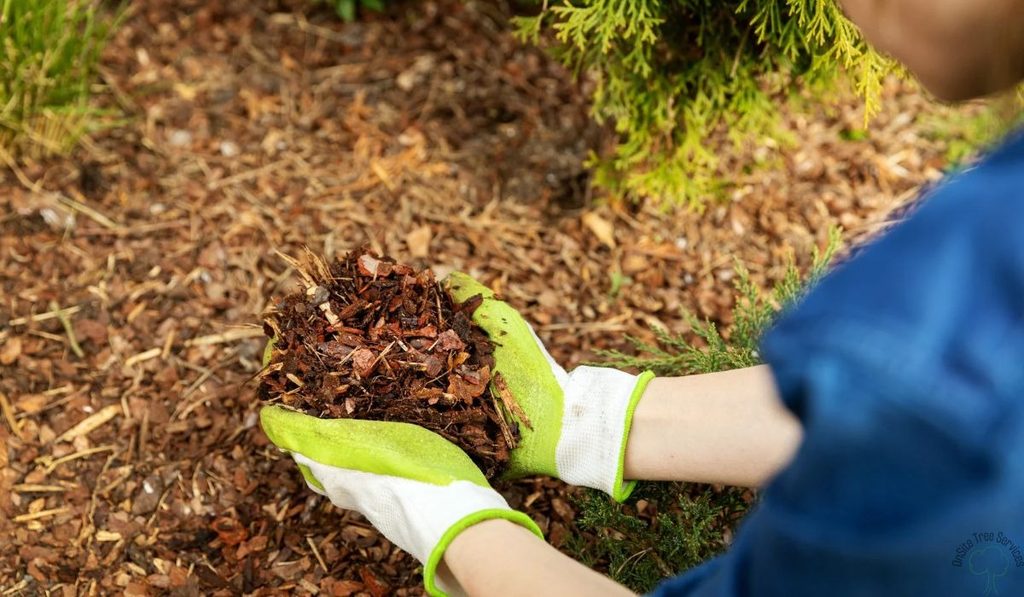
- The mulch layer stays on site, shields the ground from erosion, and feeds the soil as it breaks down.
- It suits fence lines, trails, firebreaks, and understory cleanup. Foundations, septic work, and large timber need other methods.
- Roots stay in the ground, so plan a follow-up pass when regrowth appears.
- Cost depends on acreage, growth density, terrain, and the finish you want.
Why Traditional Land Clearing Falls Short
Before we talk about a better way, let’s look at the old way. Traditional land clearing has done the job for decades, yet it carries trade-offs worth knowing.
The Multi-Machine Approach
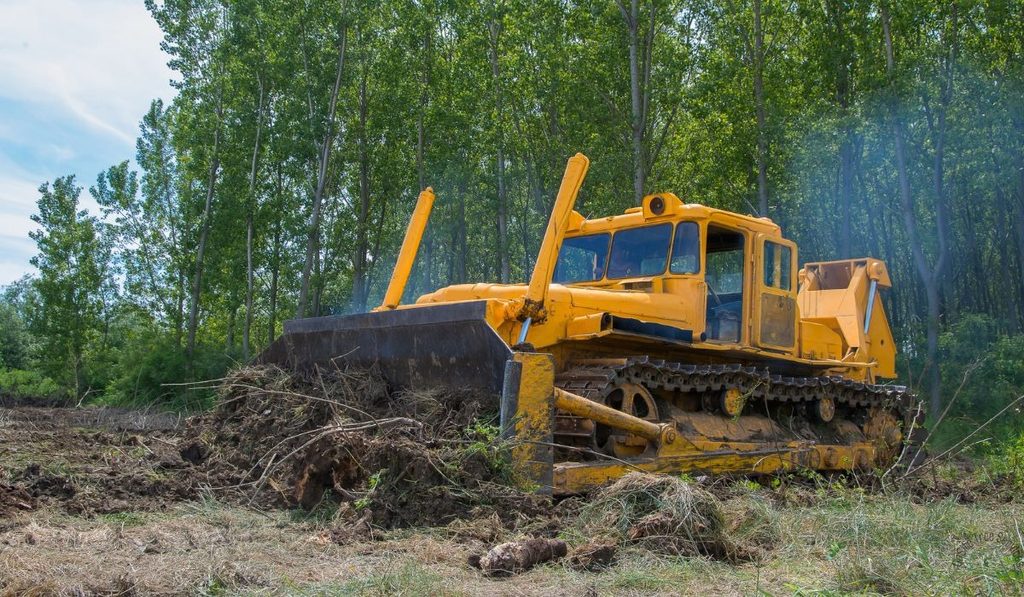
Traditional clearing methods lean more on heavy machinery, like bulldozer that pushes trees over, an excavator that pulls out roots, and a dump truck that waits nearby.
That means several machines, several operators, and a schedule that stretches for weeks. On a five-acre lot, you’ll need about three crews and plenty of phone calls.
Ripped Roots and Exposed Ground
Dozers rip roots out by force, and the tracks compact the ground. The result is soil damage that shows up fast. On a slope, rain washes bare dirt downhill, and soil erosion follows.
The Debris Problem
Once the trees are down, the piles stay behind. Hauling adds trucks, time, and dump fees.
A burn looks cheaper, yet burning debris often calls for permits and must meet local regulatory requirements. Picture a brush pile the size of a school bus that sits idle until the burn approval arrives. A quick call to your county office before you light anything can save you a fine.
What Is Forestry Mulching and How Does the Process Work?
So, what is forestry mulching, and why do so many landowners pick it? It comes down to one piece of specialized equipment that does the work of several.
One Machine, One Pass
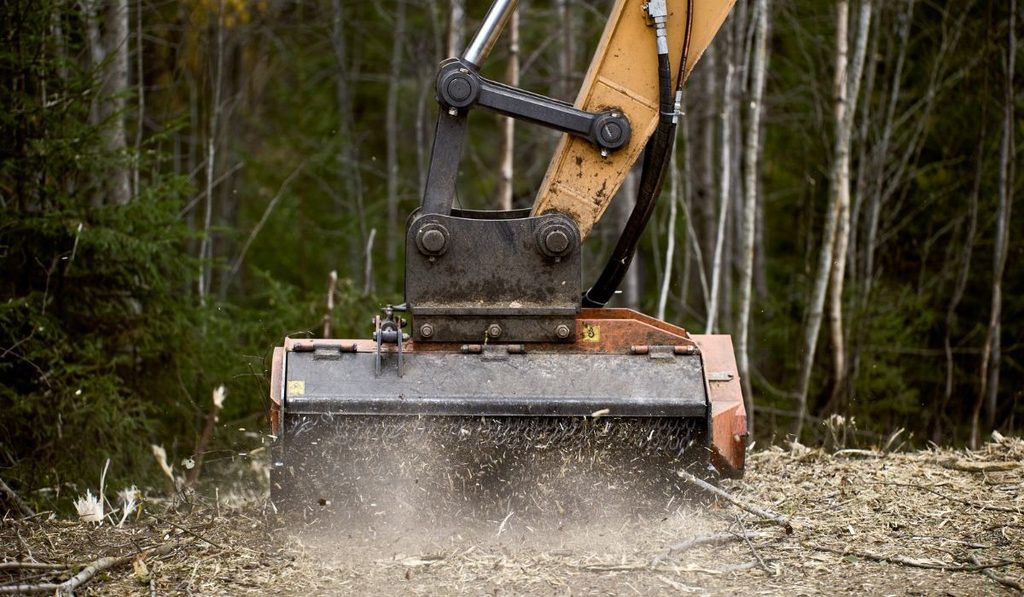
A forestry mulcher carries a rotary drum head fitted with steel teeth. It cuts, shreds, and grinds in a single pass, making mulching a one-operator job with a short schedule.
A single machine replaces the separate cutting, piling, and hauling stages. The operator handles grinding vegetation and small trees in one steady forward pass.
What the Machine Can and Can’t Handle
Remember, it’s important to match the machine to the job. Most skid steer units handle stems up to about 6 to 8 inches across, and larger carriers handle more. Here’s the quick breakdown:
- Handled readily: saplings, thick brush, and small to mid-size stems in wooded areas
- Needs a separate crew: large mature timber and deep stumps, which call for tree removal or a stump grinder
Say a fence line holds a 14-inch oak among young cedars. The mulcher clears the cedars, and a tree crew handles the oak.
Where the Material Goes
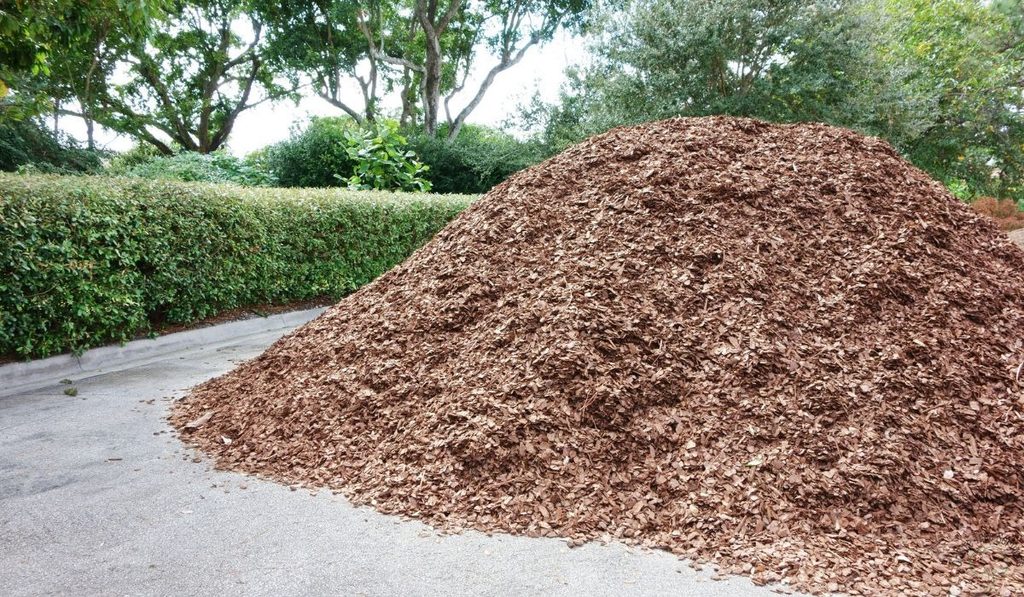
The cleared material settles into a mulch layer a few inches deep. Everything stays on the property. Burn piles and dump runs drop off your to-do list, so enjoy the free afternoon.
Selective Clearing
An operator can thin understory vegetation and invasive species such as Amur honeysuckle, autumn olive, and multiflora rose. Desirable trees stay standing, a feat that is tough for a bulldozer. Tie bright flagging tape on the trees you want to keep before the crew arrives.
What the Mulch Layer Does for Your Soil
After the machine leaves, the mulch layer goes to work. So what does that shredded wood do for your ground over the next few seasons?
A Protective Cover Against Erosion
Say there’s a hard April storm on bare dirt. Raindrops will knock soil loose, and the runoff carries it downhill. When that happens, a few inches of shredded wood acts as a protective barrier against both.
Feeding the Ground as It Breaks Down
Wood chips rot slowly, and that’s good news. As they break down, they return organic material to the soil.
Over the next seasons, soil structure loosens and holds moisture better. This improves soil quality and long-term soil health.
To check progress, dig a small hole a year later. If you find dark, crumbly soil under the chips, that means things are on track.
Clearing Room for Native Growth
Once the invasive plants are gone, sunlight reaches the ground again. Native grasses, oak seedlings, and wildflowers fill in, and plant growth picks up. The result is a healthier ecosystem and better wildlife habitats.
Want more turkeys on your back forty? If you manage hunting properties, deer and turkey will use the new edge cover.
Because the work leaves topsoil in place, the environmental impact stays low.
When Forestry Mulching Is, and Isn’t, the Right Choice
Does mulching fit your project? Here’s how property owners can match the method to their overgrown land.
Projects It Handles Well
Mulching shines on these land management jobs:
- Fence lines and property boundaries
- Trails and survey corridors
- Firebreaks around barns and homes
- Understory cleanup in overgrown areas
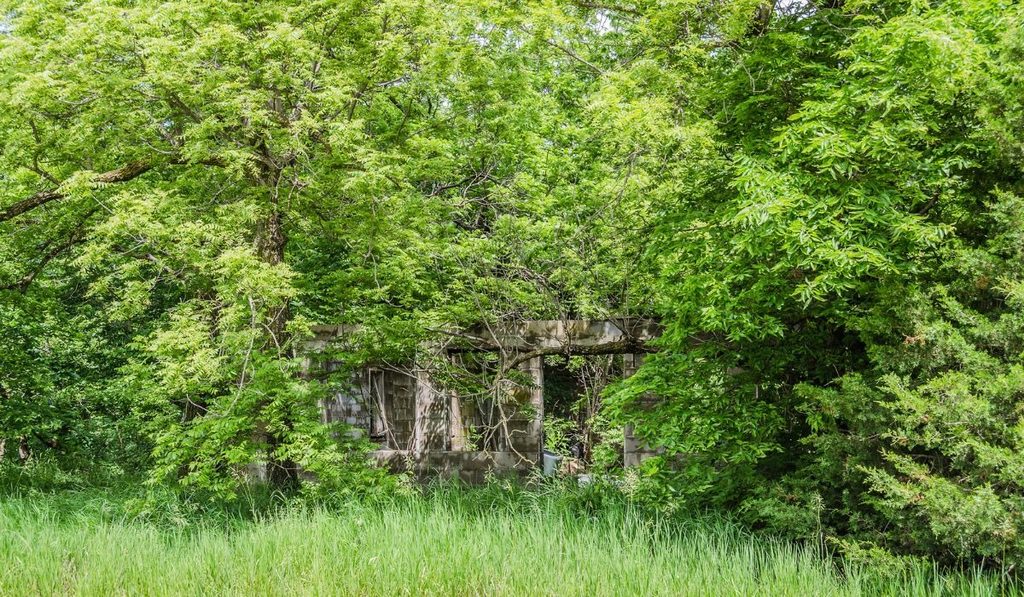
- Neglected acreage on overgrown properties that sat idle for years
Where It Falls Short
Mulching leaves root systems intact, so regrowth is common within a few years. To keep sprouts in check, make sure to plan a follow-up pass.
Excavation always comes first, because foundations and septic work need bare, gradeable soil. Also, steep, rocky, or wet ground can limit machine access. Those projects call for full land clearing instead.
What Drives the Cost
Four factors set the price on every job. Contractors usually weigh:
- Acreage
- Density and stem size of the growth
- Terrain and access
- How low a finish you want
Because mulching equipment replaces a multi-machine crew and a dump truck, it’s often cost-effective for brush.
Questions to Ask a Local Contractor
Before you hire a crew in Fort Wayne or Allen County, ask these:
- Are you licensed and insured, and can you show proof?
- Is the equipment sized for this acreage?
- Can the operator work around trees we want kept?
- What professional expertise do you have on terrain like this?
Final Thoughts
Forestry mulching clears brush in a single pass. The topsoil stays put, and all the material stays on site. That’s good for soil health, too.
It suits brush and understory best. Full site prep for a foundation or septic system still needs a different kind of land clearing.
Fort Wayne property owners, walk your acreage and note what stays and what goes. And don’t forget your good boots and a thermos. Then talk with a licensed local tree service about your goals. Visit our homepage to see how we can help.