


More than 2,100 natural gas lines are damaged across Indiana every year, mostly because someone dug without checking what sat underground first. And as a stump pull counts as digging too, it carries the same rules and the same risks as any excavation job.
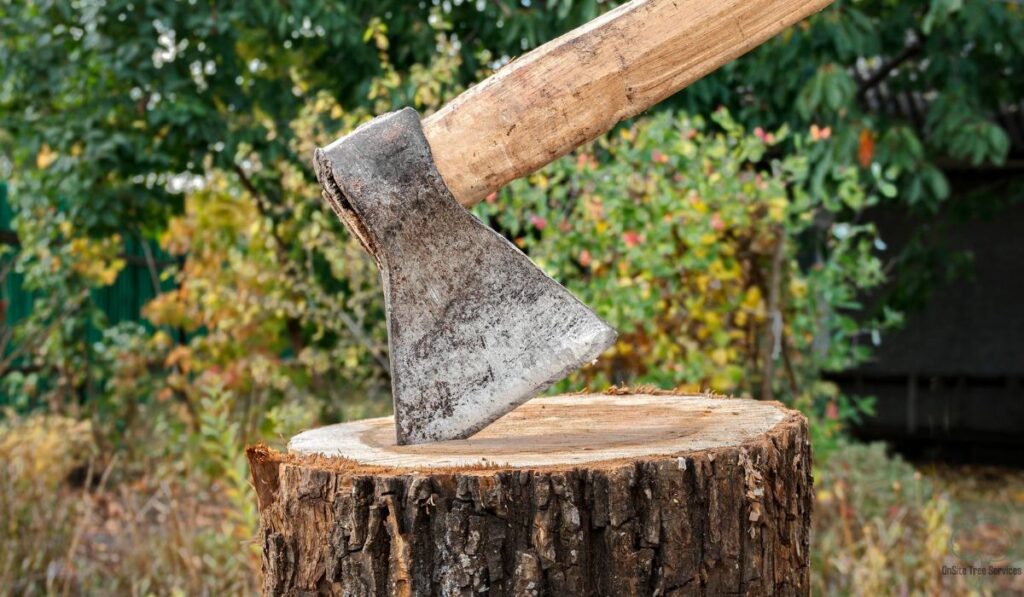
Maybe there’s an old tree stump parked in your front yard right now, snagging the mower and turning into a tripping hazard every time someone cuts across the lawn.
From our experience, homeowners want three things: the right tools, clear steps, and an honest answer on when the job stops being worth the sweat. This guide covers how to remove a tree stump by hand in Fort Wayne, start to finish.
This piece picks up where our guide on how to remove a tree stump with Epsom salt left off, for readers who’d rather dig than wait months for decay to finish the job.
And before you reach for a match on a stubborn stump, read “Can burning a stump cause a root fire” first. If this is your first stop, our full breakdown on how to get rid of a tree stump covers every removal method side by side.
Short Summary
- Measure the tree stump first. Under 12 inches is a realistic solo job; over 24 inches usually calls for a pro.
- Call Indiana 811 at least two full working days before you dig. It’s free and required by law.
- Trench around the stump, cut the roots, then lever it out and backfill the hole.
- If digging isn’t realistic, drilling and natural decay methods work, just slower. Never burn the stump.
- Stumps over 24 inches, near a foundation, or in tight clusters are usually worth handing off to a pro for stump grinding or full removal.
At a Glance: What This Job Takes
- Time: 4–8 hours for a 12-inch stump; a full weekend for anything bigger
- Difficulty: Moderate. No special skill required, but real physical effort
- Cost: $0–$60 if you already own the right tools
- Tools: Spade, shovel, mattock, loppers, bow saw
- Must do first: Contact Indiana 811 (free, required by law) before any digging
Size Up the Stump Before You Grab a Shovel
Each stump presents a different challenge. A quick look tells you what kind of afternoon you’re signing up for.

Measure the Diameter at the Widest Point
Grab a tape measure and check the widest point before you grab a shovel. Under 12 inches, you’re looking at a realistic one-person job. Between 12 and 24 inches, plan on a full weekend and a second set of hands.
Once a large stump passes 24 inches, the math stops favoring you. Hiring the job out usually saves your back.
Check the Species and the Age
Not all trees hold on the same way. Small trees and younger stumps tend to give up faster than old giants. Silver maple and ash pull free with moderate effort. Oak and hickory anchor themselves with a stubborn root system and deep roots that laugh off hand tools.
Here’s something we’ve learned over time. A stump cut two or more years ago has already started softening underground. That head start cuts the workload substantially.
Leave Yourself Leverage
If the tree’s still standing when you start, cut it high. A trunk left two to three feet tall gives you a lever arm to work with. A stump cut flush to ground level gives you nothing to push against, and that’s the difference between a manageable job and a miserable one.
Handle the Legal and Safety Steps Before You Dig
Stump removal looks simple until you hit something you didn’t expect underground. A few steps up front keep the job safe and legal.
Contact Indiana 811: It’s the Law, Not a Suggestion
Indiana Code 8-1-26 requires a call to Indiana 811 at least two full working days before any digging project, and that includes homeowners working in their own yard.
The service costs nothing, and crews come out to mark utility lines with paint or flags. Skipping the call isn’t a small risk either.
Civil penalties for violations can run as high as $10,000. Once your lines are marked, a two-foot tolerance zone applies on every side of each marking, and only hand tools are allowed inside that zone. That rule alone is one reason hand removal fits tight yards so well.
Gather the Right Tools
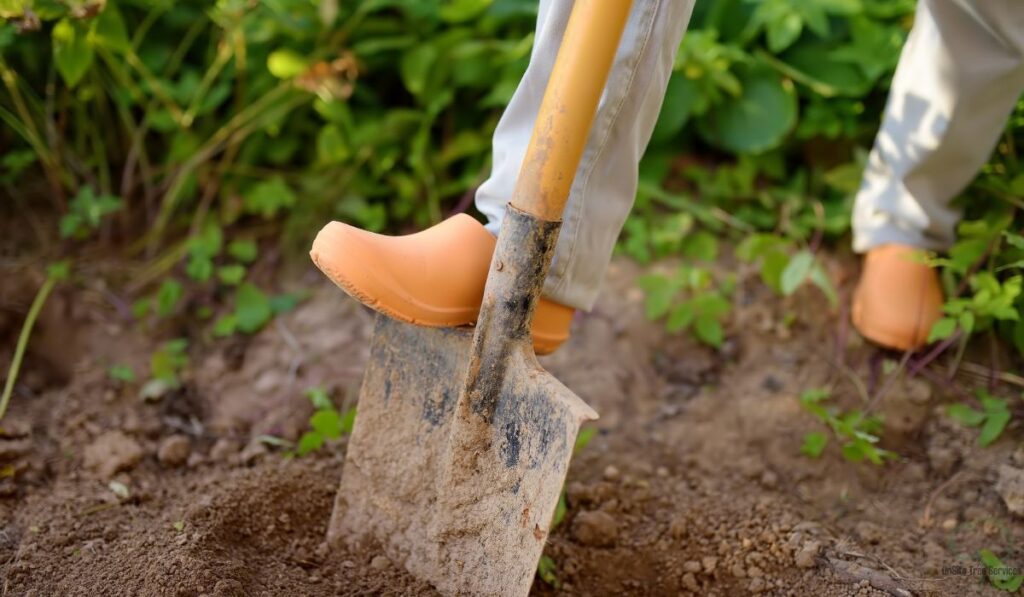
A few basics cover the right tools for most of this job. Start with a sharp spade for slicing feeder roots cleanly and a round-point shovel for moving soil out of the trench.
Add a mattock or pick for prying stubborn sections loose. Loppers handle roots under two inches, while a bow saw or axe takes anything thicker.
Save the chainsaw for above-ground cuts only, where you can actually see the blade path. Remember, soil grit destroys a chain fast, and a hidden rock buried in the dirt can cause a dangerous kickback.
Wear the Gear
Eye protection, heavy gloves, and closed-toe boots round out the list. Wood fragments and snapping roots cause most of the injuries we see on this kind of job, and good gear stops most of them before they start.
If any of this starts to feel more like a job for a crew, our tree removal services team is one call away.
How to Remove a Tree Stump by Hand, Step by Step
Here’s exactly how to remove a tree stump by hand, broken into steps you can follow in order. Work through them one at a time, and don’t rush the trench.
Step 1: Trench Around the Stump
- Start digging roughly two feet out from the trunk, down 12 to 18 inches deep.
- Work the full circle around the stump until the root collar sits exposed.
- It’s working if: you can see roots running out in every direction instead of solid soil.
Step 2: Clear the Soil Off the Roots
- Scrape or hose the exposed roots clean before you cut anything.
- Dirty roots pack grit into your blade and dull it within minutes.
- It’s working if: the roots look clean enough to see the bark clearly.
Step 3: Cut the Lateral Roots
- Work through the lateral roots one at a time.
- Cut each root at both ends, then haul the cut piece clear before moving on.
- It’s working if: the stump feels looser with every root you remove.
Step 4: Rock the Stump and Reassess
- Push the stump side to side with both hands.
- Any give at all means you’re close.
- No movement usually means a taproot still holds it down.
Step 5: Undercut the Base
- Reach beneath the stump and cut the vertical roots holding it from below.
- This step frees the entire stump from the ground for good.
- It’s working if: the stump rocks freely with almost no resistance.
Step 6: Lever It Out
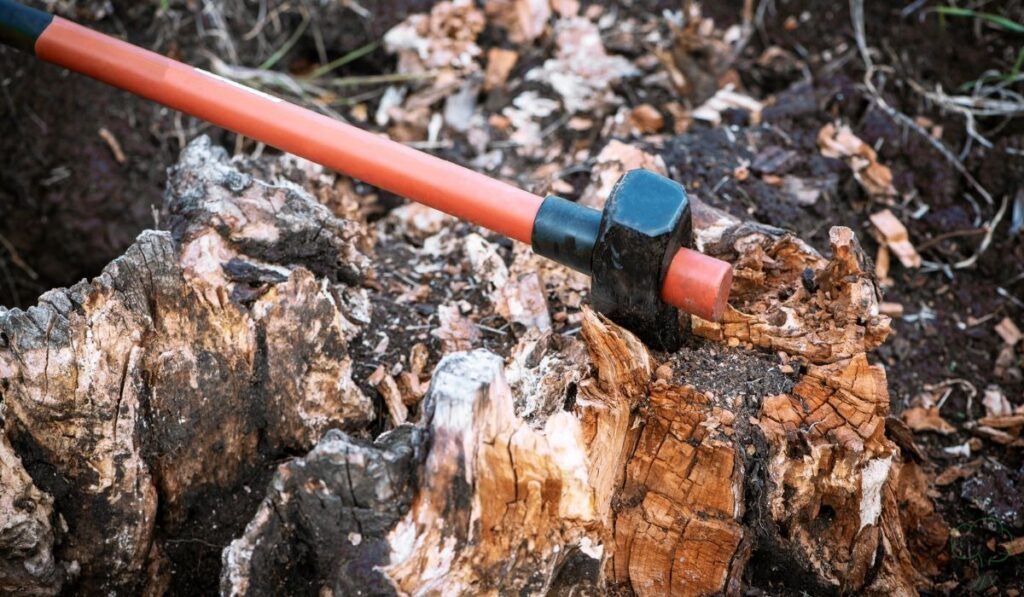
- Wedge a digging bar or a 4×4 under the root ball and lever it up rather than lifting with your back.
- This is where most injuries happen, so take it slow.
- It’s working if: the stump tips up and out of the large hole you’ve dug.
Step 7: Backfill the Hole
You’re left with a sizable hole once the tree stump is out.
Fill it with topsoil in six-inch layers, tamping each layer down, or it will settle into a dip within a season. You don’t need to chase down every last root either.
Remaining feeder roots break down naturally over time.
Work Through Thick Roots and Common Snags
Every stump throws at least one curveball. Here’s how to handle the ones we see most often.
The Stump Won’t Budge
Stop fighting the middle and deepen the trench on one side instead. Deep roots like a taproot often anchor stubbornly under the center. Cut at an angle toward it rather than straight down.
Thick Roots That Resist the Saw
Thick roots don’t always need a blade. Score the surface first, then break it with a mattock instead of forcing a saw through. The wood splits cleaner, and your blade lasts longer.
Roots Running Under Hardscape
Stop digging if roots extend beneath a driveway, patio, or foundation. Cutting structural roots in that zone risks settling damage down the road. That’s a call for a pro, not a weekend project.
Fort Wayne’s Clay Soil
Dig about 24 hours after rain for the best results. Dry clay in midsummer can end the project before you’ve made real progress.
You Hit Something Unmarked
Stop right away and recheck your 811 markings before another shovel goes in. Trust us on this: It’s always worth the extra minute to confirm.
Let It Rot Instead: When Digging Isn’t Realistic
Not every stump needs to come out today. If the dig isn’t happening, decay is a legitimate plan B.
The drill approach works well for patient homeowners. Drill deep holes 8 to 10 inches into the crown, spaced a few inches apart, then add angled holes into the sides.
Chemical stump removers speed things along too. Most use potassium nitrate to feed the wood-decaying fungi already working inside the stump. Follow the label directions, and expect four to twelve weeks minimum.
Epsom salt is the slower, cheaper option. It draws moisture out of the wood and pushes natural decay along over six to twelve months.
One thing we’d never recommend: don’t burn it. Nearly every DIY guide online tells you to soak the stump in diesel fuel and light it.
Fort Wayne City Code § 94.71 bans open burning, with fines starting at $50, and Indiana’s 326 IAC 4-1 prohibits it statewide outside narrow exemptions.
Keep in mind a decaying stump draws termites and carpenter ants while it breaks down.
Know When to Hire Professional Stump Removal
Some stumps make sense to hand over to a pro from the start. Here’s how to know if yours is one of them.
The Thresholds
Stumps over 24 inches, mature trees with a wide root flare, and multiple stumps in one yard all push the job past DIY territory. The same goes for anything within 10 feet of a foundation, septic field, or marked utility line.
What Grinding Actually Does
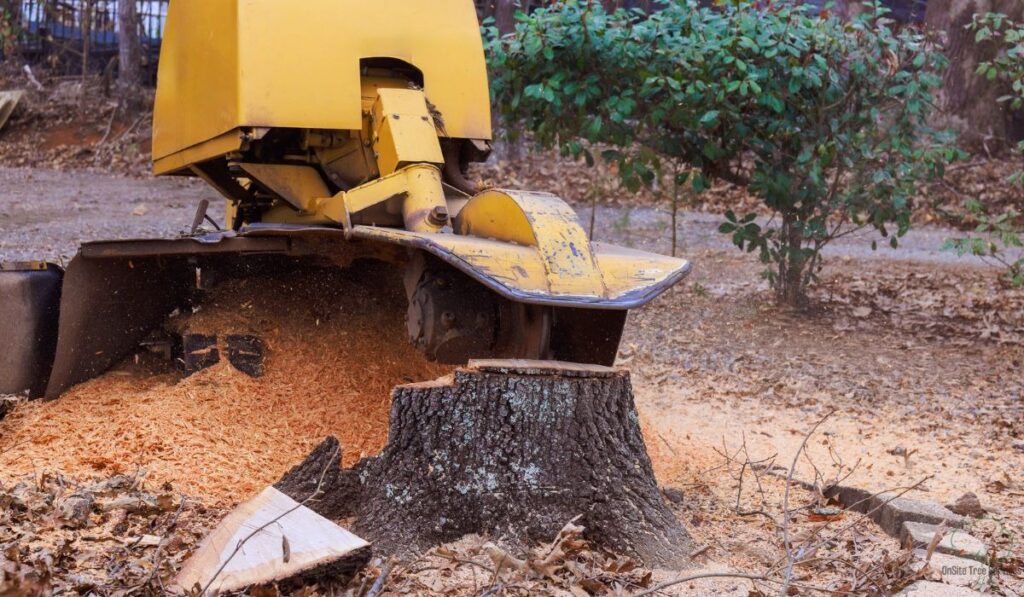
A stump grinder performs stump grinding by cutting the stump 4 to 12 inches below grade and leaving the root system in place to decay. That’s plenty for mowing, planting grass, or landscaping right over the spot.
Grinding vs. Full Removal
Full tree stump removal pulls the entire root ball out of the ground, and it costs considerably more than grinding. Grinding fits most yards, while full removal makes sense when you plan to build or replant in that exact spot.
What It Costs
Professional stump removal through grinding runs roughly $2 to $5 per diameter inch with a $100 minimum, according to Angi’s 2026 cost data. Set that number against a weekend of labor and tool rental, and the math often favors calling in a professional arborist.
Our stump grinding services team can walk you through your options.
Final Thoughts
Now you know how to remove a tree stump by hand, start to finish. A stump under 12 inches, with clear access and 811 confirmed, is a weekend job you can finish yourself.
Two things matter most along the way. Call Indiana 811 every time, and never burn the stump. If yours falls outside that range, our team at OnSite Tree Services is happy to take a look. Stop by our homepage anytime, we’re glad to help with your yard.