

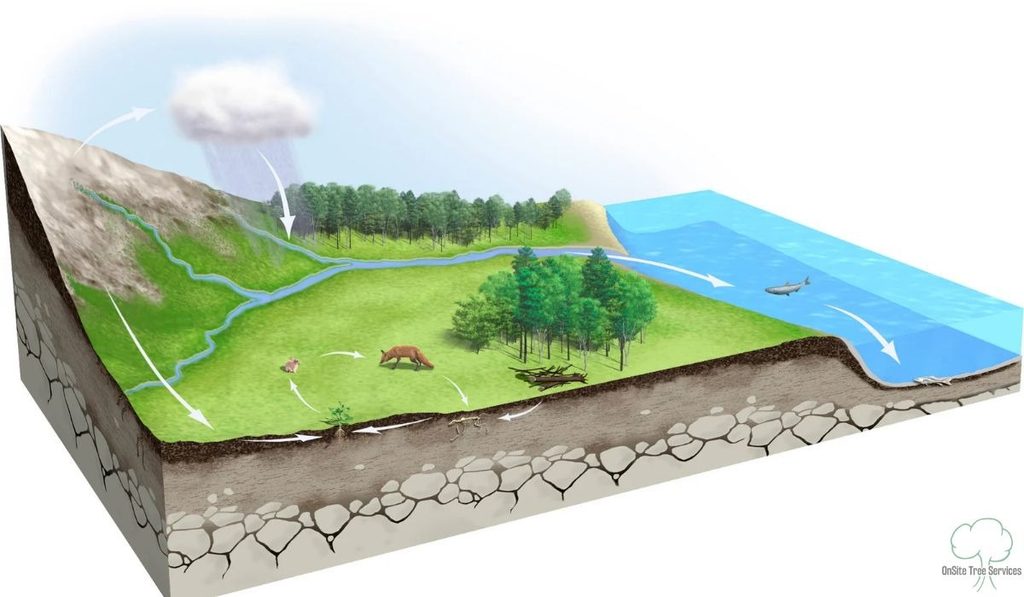
Trees pull groundwater up through their roots and release it into the air as vapor. That vapor forms clouds and returns as rainfall. Remove the forest, and the water cycle breaks.
Vapor drops, clouds thin out, rain declines, and more water runs off the surface before the soil can take it in. According to Global Forest Watch, the world lost 4.3 million hectares of primary tropical forest in 2025, which weakens the moisture that travels inland as rain.
That feels a long way from Fort Wayne. From our experience, though, even a small drop in forest cover changes how a yard drains after a storm.
So, how does deforestation affect the water cycle in Fort Wayne, and what does it mean for your property? We will cover the science, the local picture, and ways to protect your trees.
Trees do more than shade a driveway. Our previous article covered the effects of deforestation, and this one follows the water. Once you see how a healthy canopy handles rain, the next question is how to keep that canopy strong.
Our next article shows you how to protect trees from pests, because a stressed tree drops leaves and moves less water. For the bigger picture, our main guide on deforestation solutions explains what communities and property owners can do.
Each of these pieces answers a version of one question: what happens to rain when trees disappear? Start here, then follow the links that fit your yard and your questions.
Short Summary
- Trees pull water from the soil and release it as vapor, which forms clouds and falls as rain.
- Moisture recycling carries that water inland, so forests support rainfall far from where they grow.
- Cleared land sends up less vapor, so rainfall declines downwind and dry spells get worse.
- Bare ground sheds rain as runoff, which erodes soil and carries sediment into streams.
- Sediment raises drinking water treatment costs, and more forest cover in a watershed lowers them.
- Large-scale clearing, led by cattle ranching in the Amazon, adds heat and releases stored carbon.
- In Fort Wayne, heavy clay soil and spring downpours make tree cover valuable for reducing runoff.
- One mature yard tree matters, so protect its roots and get an assessment before any removal.
The Science: How Trees Move Water From Soil to Sky
Before we look at what goes wrong, let’s see first how the system runs when everything is healthy. Three steps carry water from soil to sky. Trees do a lot more than shade the picnic table.
Transpiration and the Forest Water Pump
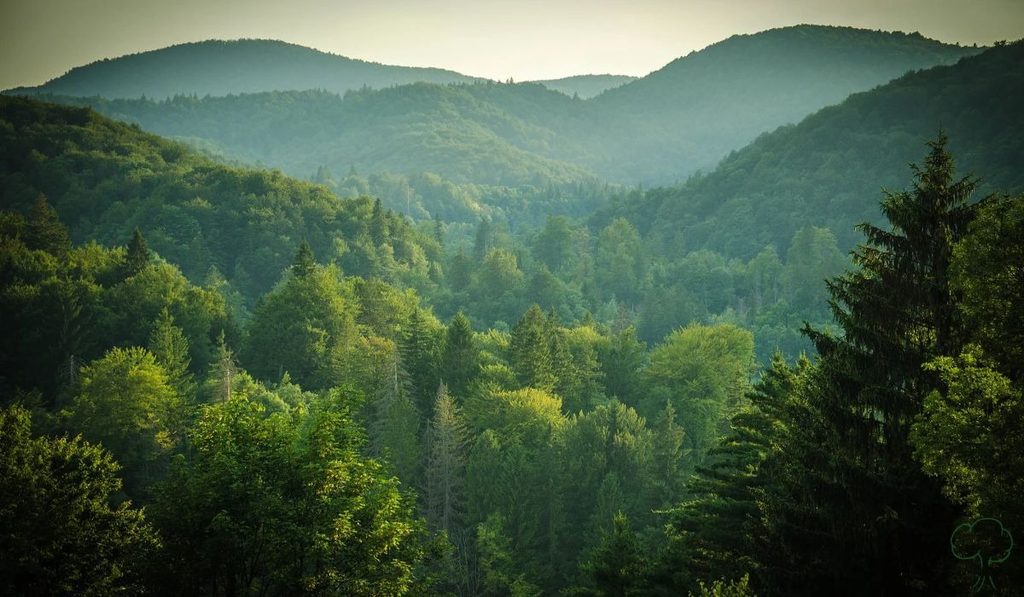
Tree roots draw moisture from deep in the soil, and the leaves release it into the air as water vapor. Scientists call that release transpiration.
The volume is a big deal. A large oak can transpire about 40,000 gallons a year, according to the USGS. That averages out to roughly 200 gallons on a typical leafy day.
Add the water that evaporates from wet soil and leaf surfaces, and you get evapotranspiration. A dense canopy pushes that total higher, because more leaves mean more places for water to escape.
Say a homeowner asks why the soil near an old oak feels drier than the lawn in August. It’s because the tree has drawn that water up and sent it out through its leaves.
From Vapor to Clouds to Rainfall
Vapor rises into the atmosphere, cools, and condenses around tiny particles. That step is cloud formation. Once the droplets grow heavy, precipitation follows.
Here’s the idea that makes the rest of this article click (so we think). Where does rain go after it lands? Much of it heads right back up.
Roots absorb the water, and leaves release it again as vapor. Scientists call this moisture recycling. Each round carries the water farther inland, so forests deep in a continent still get rain.
In the Amazon basin, researchers estimate that 20 to 40 percent of rainfall comes from moisture the forest recycles. Remove enough of that forest and the supply shrinks.
What Breaks When the Canopy Goes
Take the leaves away and the vapor supply drops. Less vapor means thinner cloud cover, and thinner cloud cover means decreased precipitation downwind.
Then a feedback loop kicks in. Drier air dries the leftover soil, which stresses the trees that survive. Stressed trees transpire less, and the next drought hits harder.
This is what happens when a hillside loses a third of its trees to make room for a new subdivision. By July, the nearby trees face hotter, drier air and begin dropping leaves early.
Watch your own trees for early warning signs. Leaf scorch, or browned edges in midsummer, is a common one.
The table below compares the two conditions side by side.
| Healthy Canopy | Cleared Land | |
| Rainfall interception | Slowed by leaves and branches | Hits bare soil at full force |
| Water into the air | High transpiration | Near zero |
| Water into the ground | Deep infiltration, recharged groundwater | Shallow, fast saturation |
| Surface runoff | Minimal | Heavy, fast, carries sediment |
| Soil | Held by root networks | Eroded and compacted |
What Is the Effect of Deforestation on the Environment and Water Quality?
The effect of deforestation on environmental health starts at ground level and flows downhill from there. Two things change: how rain reaches the ground and what that water carries away.
When Runoff Replaces Absorption
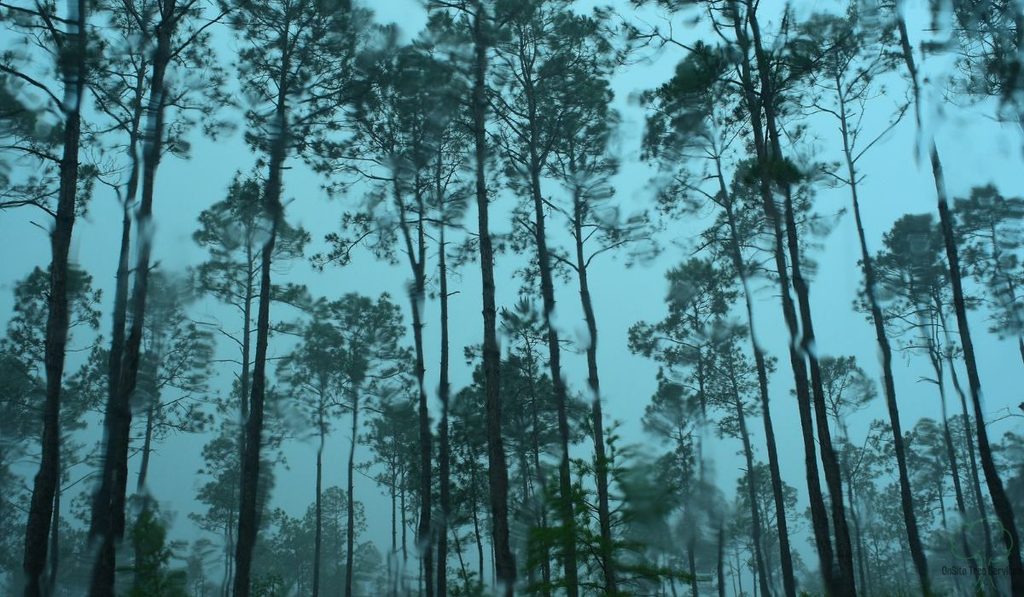
Dense vegetation and an intact forest canopy slow the rain, so the ground can take it in evenly. Strip those away, and the rain arrives all at once on bare ground.
Water that stays on the surface becomes increased runoff, and it picks up speed on slopes. That rush lifts loose soil off the ground, and the result is soil erosion. Topsoil leaves with the water and brings sediment and agricultural chemicals into streams and rivers.
Ever notice how a creek turns the color of chocolate milk after a big storm? That brown is topsoil (not chocolate, sorry), and it came from somewhere upstream. Sediment also settles in stream beds and buries the gravel where fish lay eggs.
After a hard rain, check the water at your lowest spot. Muddy water means topsoil has left your property. A layer of mulch and native groundcover helps hold soil in place during heavy rain.
Downstream Costs for Drinking Water
Sediment travels downstream until it reaches the intake at a treatment plant. Cloudier source water means more filtration, more chemicals, and higher drinking water treatment costs. Who pays for that extra treatment? Usually every household on the water bill.
A Trust for Public Land and American Water Works Association survey of 27 suppliers found a clear pattern. For every 10 percent gain in forest cover in the source area, treatment and chemical costs dropped about 20 percent. That trend held up to about 60 percent forest cover.
New York City chose to protect forests in its upstate watersheds rather than build a filtration plant. Estimates put the savings at several billion dollars.
Intact tree cover is a filter that works for free, and it delivers clean water to your tap. Water quality is a watershed-scale issue, so one cleared lot can affect neighbors miles downstream. Protecting water resources begins wherever rain lands, and that includes your yard.
Where It Is Happening at Scale
So how does a cattle pasture in Brazil connect to a backyard in Fort Wayne? The answer starts with where the clearing concentrates, why it happens, and how its effects travel across whole continents.
Tropical deforestation clusters where land is cheap and demand is high, and the Amazon rainforest is the clearest example.
Cattle ranching drives most large-scale deforestation there, while crop farming and timber add to the forest loss each year. Rainfall loss travels, because forests hundreds of miles upwind supply the moisture that downwind farmland depends on.
Trees cool the air through shade and transpiration, so lost canopy leaves the landscape hotter. Picture a cleared pasture in July, bare and far hotter than the forest that once stood beside it.
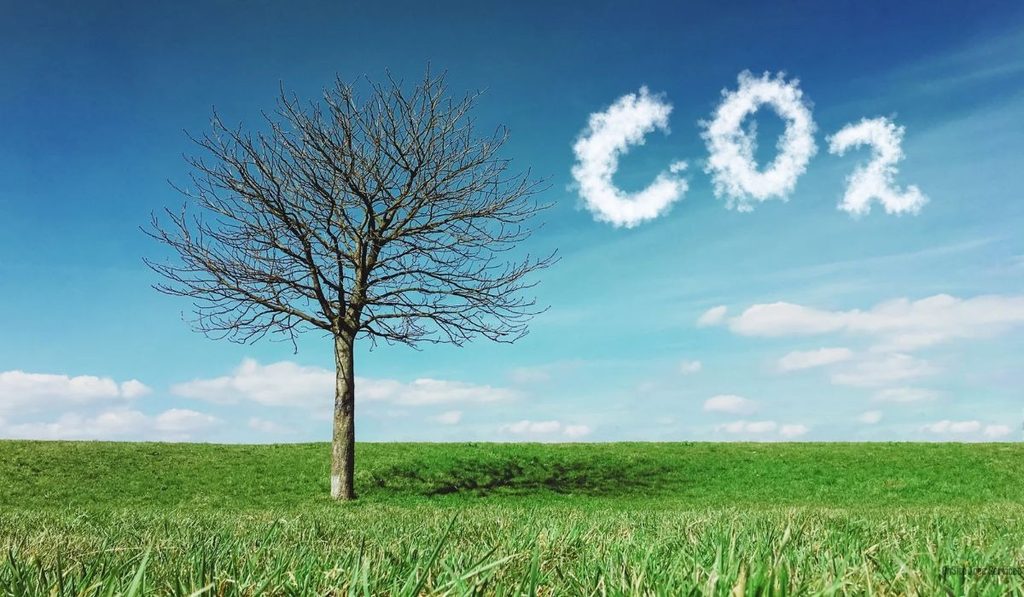
Trees also store carbon, and felled or burned trees release it as carbon dioxide, which feeds global warming. That extra heat dries the soil further, so climate change and forest loss speed each other up.
What Canopy Loss Looks Like in Fort Wayne
Trees shape how a Fort Wayne neighborhood handles rain, from the riverbanks to the backyard. Here’s what canopy loss looks like at both scales.
Three Rivers, Clay Soil, and Fast Water
Fort Wayne sits where the St. Joseph and St. Marys rivers meet to form the Maumee. Northeast Indiana’s heavy clay soils already drain slowly. So water lingers on the surface after a storm.
Remove tree cover from that setting, and three things change. Leaves catch less rain, the soil saturates faster, and more water enters the storm system during heavy spring downpours.
The Long Term Control Plan wrapped up in 2025, and City Utilities reports overflows down 94 percent since 2008. Older neighborhoods still use combined sewers, where stormwater and sewage share pipes. So tree cover that reduces runoff eases the load on those pipes.
What Happens on a Single Property
Now shrink the picture to a single yard.
A mature shade tree intercepts rain before it lands, and its roots open channels that send water downward rather than sideways. Trees absorb water in bulk, so one large maple can keep a low corner of the lawn drier.
Say a homeowner removes a mature silver maple near the driveway. The next heavy rain leaves puddles, a soggy low corner, and mulch beds washed onto the sidewalk. Compacted soil then repels the next storm, so the problem repeats.
Protecting the Canopy You Already Have
We tell property owners the same thing: a mature tree takes decades to replace. Try these habits:
- Plant native species suited to Allen County soils: oak, maple, sycamore, and hackberry.
- Protect root zones during construction, driveway work, and regrading.
- Avoid soil compaction from equipment and repeated parking under the drip line.
- Prune for structure and health, and keep whole mature trees in place.
- Get a professional assessment before you remove a large tree that manages drainage.
Final Thoughts
The short version: the canopy moves water into the air, and the roots move it into the ground. Lose either one, and rainfall changes, along with where the rest of the water ends up. That’s the impact of deforestation on our local environment.
Protecting the water cycle starts with the canopy in your own neighborhood. OnSite Tree Services helps Fort Wayne property owners keep mature trees healthy with assessments and selective pruning instead of removal.
Visit our homepage to learn more, or reach out with questions about your trees.
Frequently Asked Questions
Disclaimer: This article is for general informational purposes only and does not constitute legal, insurance, or professional advice. Policies, laws, and circumstances vary, and readers should consult qualified professionals before making any decisions. OnSite Tree Services is not responsible for any actions taken or not taken based on the information provided and assumes no liability for errors, omissions, or outcomes related to this content.