


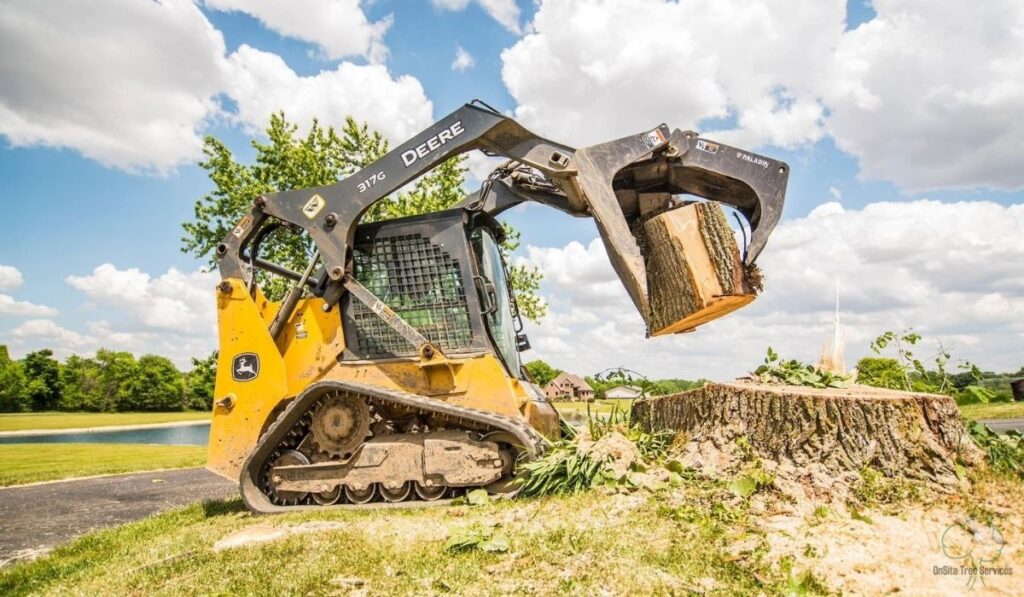
That freshly cut tree likely improved your Fort Wayne property’s light and curb appeal. But now you’re left with a rugged, wooden reminder.
This common scene plays out across the country, supported by a tree service industry that has grown to a $39.5 billion force, fueled by the needs of expanding neighborhoods and commercial landscapes. So, if you have a tree stump marring your yard, you have plenty of company.
The critical question becomes: what’s the best way to handle it? This brings us directly to the core question: what is stump grinding in Fort Wayne? It’s the efficient process we rely on to eliminate these yard hazards.
From our experience, understanding your options for stump removal empowers you to make an informed decision for your home.
In our broader guide on how to get rid of a tree stump, we’ve already covered the pros and cons of stump grinding. Here, we’ll focus specifically on what the process entails. Stay tuned for a future post where we’ll break down how to use a stump grinder for the ambitious DIYer.
Short Summary
- Stump grinding is an efficient process that uses a specialized machine to chew a tree stump into small wood chips.
- It eliminates tripping hazards, prevents pest infestations, and improves your yard’s aesthetics.
- The process is faster and less invasive than full stump removal, which excavates the entire root ball.
- Always call Indiana 811 before any digging to locate underground utilities.
- Hiring a professional ensures the job is done safely and cleanly, preparing the area for new growth.
The Lingering Problem of Tree Stumps After Removal
That sense of relief after a tree is removed is real. But the job isn’t always finished. That remaining tree stump is more than just an eyesore; it’s a source of persistent issues for your property.
Let’s break down why these unsightly tree stumps stick around and the headaches they cause long after the tree removal crew has left.
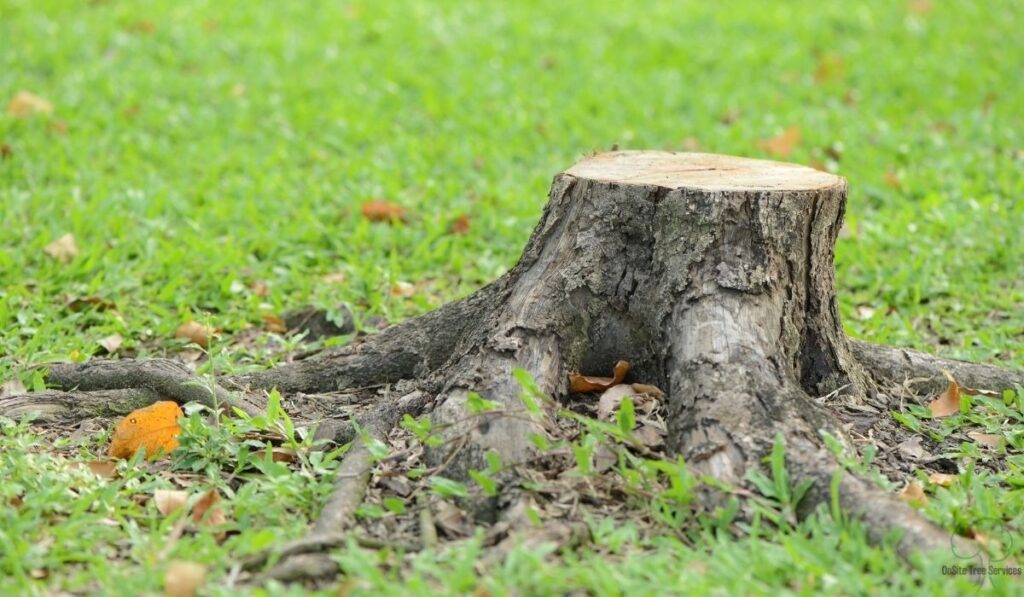
More Than Just a Tripping Hazard
A remaining tree stump creates a real safety concern. It’s a perfect tripping hazard for kids playing or adults walking across the lawn. You can also say goodbye to a smooth mowing experience.
Hitting a stump with a mower blade causes expensive damage and can launch debris at dangerous speeds.
These stumps also attract unwanted guests. We often find carpenter ants and termites see a decaying stump as an all-you-can-eat buffet. Once they settle in, your house becomes the next logical target. This pest harborage is a common problem we address.
A Persistent Headache for Your Landscape
Think that stump is dead? Think again. Many species, like maples and oaks, will re-sprout with a ring of tiny trunks around the base. This sucks energy from the soil and battles your other plants for resources.
That new tree you wanted to plant nearby will compete with the old root system, which can stunt its growth for years.
Patience isn’t a great solution here either. In Indiana’s climate, a stump can take a solid 5 to 10 years to decompose naturally. All that time, it’s taking up valuable space and creating an uneven surface in your yard.
The Hidden Complications Below the Soil
What you see above ground is only part of the story. The extensive root system spreads far and wide. This network prevents you from achieving a level lawn and complicates any future landscaping projects.
There’s a crucial legal step too. Indiana’s 811 Dig Law requires a call to have underground utilities marked at least two full business days before any stump grinding begins.
This protects you and our team from catastrophic and costly accidents. This is a non-negotiable part of a safe stump removal process.
For many homeowners, the initial cost of dealing with a tree stump feels like an extra burden. But when you weigh the long-term risks and annoyances, the choice becomes clear.
Making an informed decision now saves you from bigger problems down the road. A professional tree removal company can help you see the full picture.
What Is Stump Grinding? Unpacking This Effective Solution
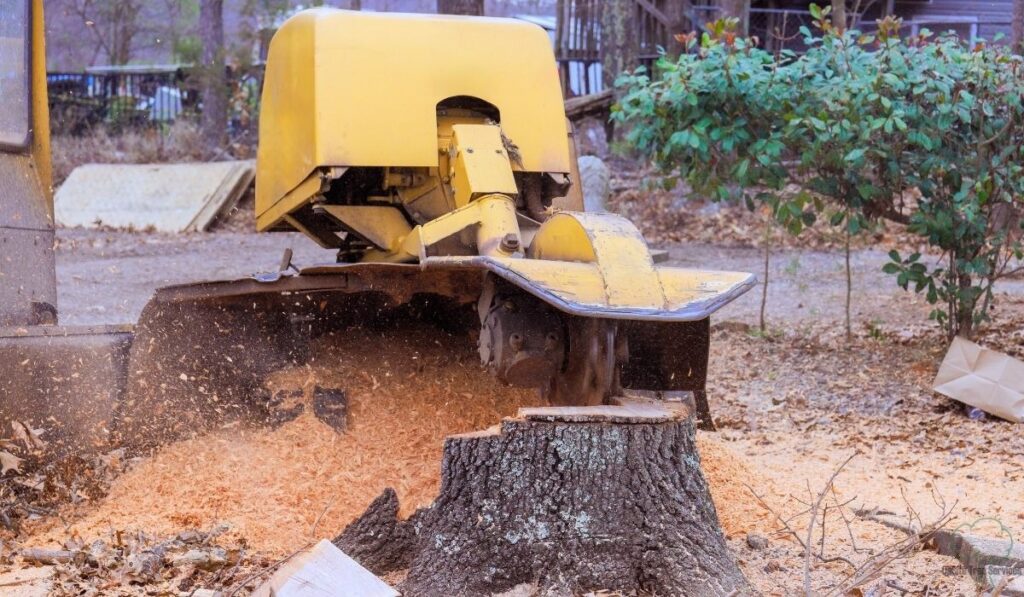
So, how do we tackle this stubborn problem? The most common and efficient method is stump grinding. Simply put, stump grinding is the process of using a powerful machine to shred the entire tree stump, along with its surface roots, into a pile of small wood chips.
How a Stump Grinder Works Its Magic
The star of the show is a machine called a stump grinder. It features a rotating cutting disc, often called a wheel, that is outfitted with dozens of sharp, tungsten carbide teeth.
This rotating blade chews into the stump wood with incredible force. It systematically reduces the entire stump down to a heap of usable wood chips.
We control the machine’s depth and movement to grind the stump base well below the surface. Our goal is always to grind 4 to 8 inches deep. This eliminates the tripping hazard and allows for immediate replanting or sodding.
Stump Grinding vs. Full Stump Removal
This is a key distinction. Stump grinding removes the visible portion of the stump. Full stump removal, or excavation, is a different beast.
That process involves digging out the entire stump and the main root ball with heavy machinery. It leaves a massive hole that requires significant backfilling.
For most residential properties, grinding is the superior effective solution. It’s faster, less invasive, and far more affordable. We typically suggest grinding because it solves the immediate problem without tearing up your entire lawn.
The Right Tool for the Job
Not all stump grinders are the same. We match the machine to the task for maximum efficiency and safety.
Smaller stump grinders are narrow and maneuverable. They are perfect for tight spaces between fences or houses.
Skid-steer grinders offer more power and stability. We use these for medium-sized jobs where we have good access.
Riding grinders have continuous track treads for excellent traction. They handle larger stumps with ease and reduce operator fatigue.
For the biggest stumps on large properties, we might use a small tractor with a grinder mounted on its rear hitch.

Why This is a Job for the Pros
We get it. Renting a stump grinder for a diy job can seem tempting. These are powerful machines that demand respect. The risk of injury from flying debris is high, and without experience, you can easily damage your lawn or hit other structures like sprinkler lines.
The flying debris alone is a major concern. It can include rocks and wood chunks that travel at high speed. Our team uses full protective gear, including face shields and heavy clothing, for a reason.
To properly grind a stump requires skill to control the machine and achieve a clean, deep result. Trust us, some tasks are best left to a professional crew with the right training and insurance.
Step-by-Step Breakdown of the Stump Grinding Process
Ever watch a stump vanish and wonder how it’s done? It’s a systematic operation, not magic. A professional grinding service follows a precise sequence to ensure safety and a clean finish. Let’s walk through what our team does from start to finish.
Preparation is Everything
Our first step is always a thorough inspection. We measure the stump’s size and note any rocks or obstacles. A general rule we follow: the cost and time depend directly on the stump size and its root spread.
Then, we make the critical call to Indiana 811. This marks all underground utilities at no cost to you. It’s a legal must-do that prevents dangerous and expensive accidents. We also clear the area of toys, patio stones, and dog pens. This gives us a safe zone to operate.
The Grinding in Action
With the site ready, we position the grinder. The operator makes a series of horizontal passes across the remaining stump. The machine’s rotating wheel chews through the stump wood with powerful, controlled bites.
We work methodically from one side to the other. The operator gradually lowers the cutter head with each pass. Our goal is to grind the main stump and its major lateral roots down to 6 to 12 inches below the surrounding ground level.
This depth ensures the hole left can be filled properly and prevents new growth.
The Final Cleanup and Restoration
Once the stump is ground, you’re left with a pile of fresh wood chips and a hole. This is where the transformation happens. We often shovel the coarse wood chips from the hole. You can use them as mulch in other garden beds.
We then backfill the depression with the loose soil from the pile. We tamp it down firmly to create a stable base for your lawn. A little topsoil and some grass seed, and that eyesore is ready for new growth.
This entire grinding process is why hiring professional arborists for stump removal services is a smart move for your property’s tree care.
Key Benefits and Considerations for Grinding Stumps in Your Yard
Choosing to grind a stump is a smart decision for most properties. It’s the gold standard for a reason. Let’s look at the clear advantages and a few practical points to ponder before you book the service.
Why You’ll Love the Results
The benefits are immediate and long-lasting. The most obvious win is the instant removal of tripping and mowing hazards. Your lawn becomes safe and usable again. The space opens up for new possibilities.
You also eliminate a hub for insects. Without the decaying wood, you remove a tempting food source for termites and ants. This protects your home and other plants.
The leftover wood chips are a fantastic bonus. They make excellent mulch for your garden beds, recycling the tree back into your yard.
Perhaps the biggest perk compared to full excavation is the minimal mess. The process leaves a small hole to be filled, not a crater. This makes restoration simple and fast.
A Few Practical Points to Ponder
A key factor for many homeowners is cost. The price for stump grinding services depends on the stump’s size, its root system, and how easy it is for our equipment to access it.
A small stump in the middle of a open lawn is straightforward. A massive one tucked behind a shed is a different story.

We always advise against a DIY approach for anything but the smallest, most accessible stumps. The power of these machines is no joke.
For instance, we see folks consider burning stumps. This is a terrible idea. Smoldering roots can travel underground and damage other structures or even start a root fire.
Here in Fort Wayne, our clay-heavy soil adds another layer. A ground stump improves drainage in the same area, preventing water from pooling against the old roots. This leads to a healthier, more even lawn. Weighing these pros and cons helps you make an informed decision for your beautiful outdoor space..
Final Thoughts
A leftover tree stump doesn’t have to be a permanent fixture in your yard. Stump grinding offers a fast, efficient way to reclaim your space and eliminate the risks. This process clears the path for a safer, more beautiful lawn.
You now have the knowledge to make an informed decision. If you’re ready to turn that eyesore into a fresh start, we’re here to help. Our team is ready to give you a free, no-obligation quote. Visit our homepage to see how we can transform your outdoor space today