

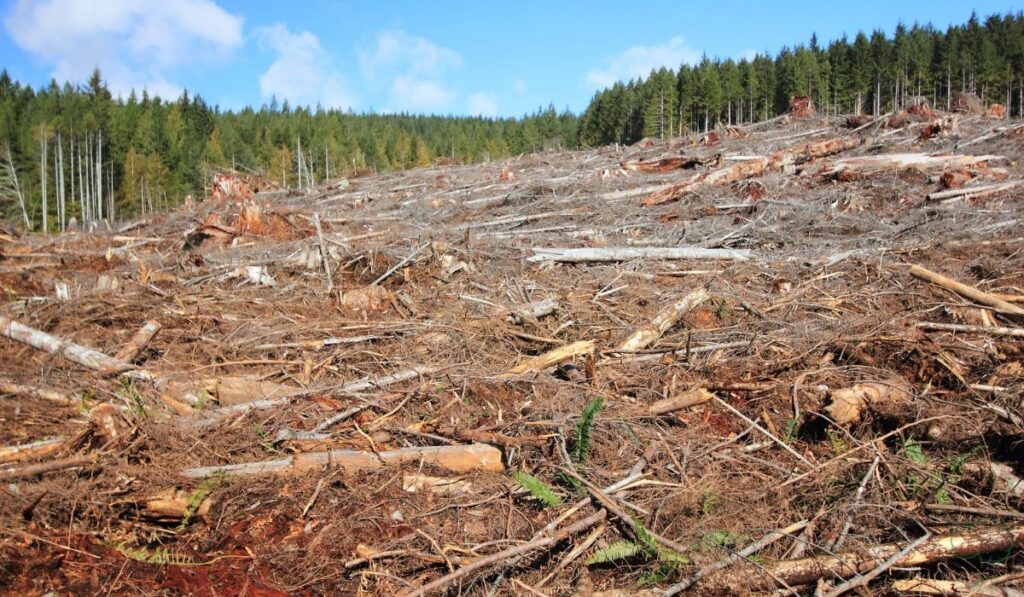
Picture eleven football fields. Now picture them disappearing every single minute, somewhere in the world’s tropical rainforests. And that’s not a hypothetical.
Recent satellite monitoring from the World Resources Institute’s Global Forest Watch found that 4.3 million hectares, roughly 10.6 million acres, of tropical primary rainforest vanished in a single year.
Numbers that large can feel abstract, so let’s bring them down to earth. The effects of deforestation in Fort Wayne reach far beyond the tropics most of us picture when we hear the word.
From our experience covering forest loss and land health, the damage rarely stays contained to one region or one type of tree. Healthy forests do quiet, essential work everywhere they grow, whether that’s a rainforest in Brazil or a cluster of oaks in a Midwest neighborhood.
This article walks through what happens when natural forests disappear, why it matters even if you’ve never set foot near a rainforest, and what that connection means for the trees closer to home.
Our previous piece on deforestation facts breaks down the numbers behind the crisis in more detail.
Once you understand what’s driving the loss, the next natural question is what it does to rainfall and drought, which we tackle in another piece on how deforestation affects the water cycle.
And if you’re looking for what can actually be done about it, check out our guide on deforestation solutions.
Short Summary
- Deforestation can affect climate change, wildlife, soil, water systems, and people.
- Forest clearing destroys habitats and can divide remaining forests into isolated patches.
- Forest-dependent communities may face risks to food, water, income, and other resources.
- Responsible land use and tree care can help protect forests and preserve healthy local canopy.
- Property owners can maintain healthy trees, replace lost canopy, and make informed decisions before removal.
Uncovering the Global Effects of Deforestation on Climate Change
Why Does Deforestation Occur?
Nobody clears a forest for fun. There’s almost always money or survival behind it. So why do it? There are several reasons we can look at to help us see the effects of deforestation before we ever get to the climate side of things.
At the top is agricultural expansion. Cattle ranching and other forms of livestock production alone account for roughly 40% of tropical forest loss worldwide, and that number climbs even higher across parts of the Amazon rainforest.
Across Southeast Asia, palm oil plantations drive much of the clearing. Demand for the crop has reshaped entire landscapes over the past few decades. A handful of other pressures round things out:
- Logging, both legal and illegal
- Road construction and other infrastructure development
- Urban expansion in certain fast-growing regions
Each of these turns a complex, layered ecosystem into something much simpler. Grazing land, cropland, a plantation row, a highway. The forest that stood there doesn’t come back on its own.
How Forest Loss Releases Stored Carbon
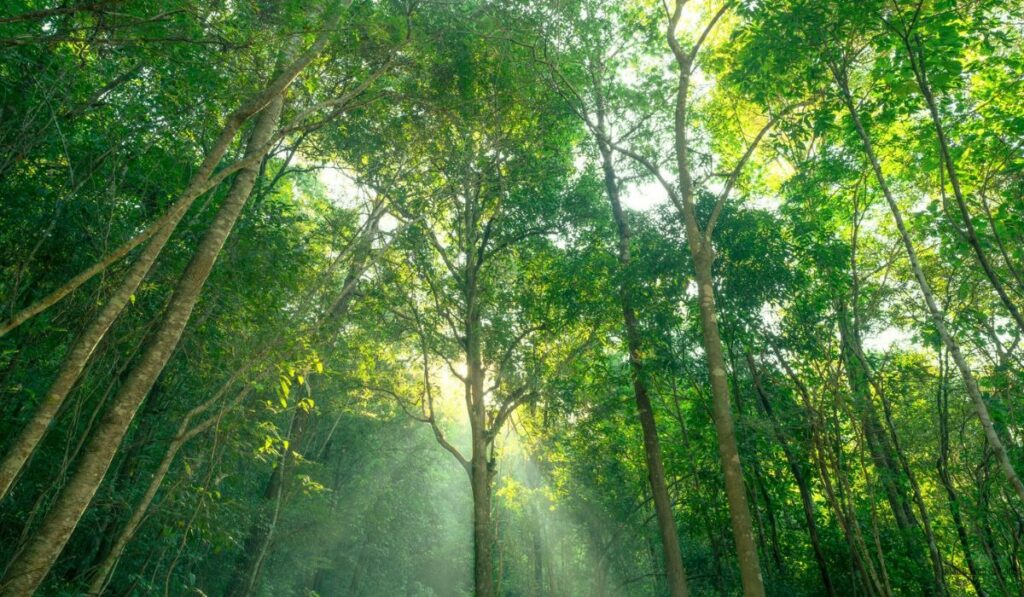
More than just scenery, a standing forest is a working carbon system. Trees pull carbon dioxide out of the air through photosynthesis and lock that stored carbon away in trunks, roots, and soil for decades, sometimes centuries.
Cut, burn, or degrade that forest, and the equation flips. Less carbon dioxide gets absorbed. And some of what was already banked in the soil and vegetation gets released back into the atmosphere.
That combination adds to greenhouse gas emissions. And that, as we all know, contributes to global warming, right alongside fossil fuels, though through a different mechanism. One is extraction and burning. The other is losing a natural system that used to clean the air for us.
Deforestation, Weather Patterns, and the Water Cycle
Speaking of weather, did you know that forests also run their own local weather? Tree canopies catch rainfall, roots hold moisture in the soil, and leaves release water vapor back into the sky through evapotranspiration. Remove enough forest, and that cycle weakens.
Changing regional weather patterns is one of the not-so-desirable effects of large-scale clearing. Another effect is the changes to rainfall, something which a landscape depends on since time immemorial.
Add forest fires into the mix, often more frequent in degraded, drier forest edges, and the damage multiplies.
Sure, none of this means one cleared hillside causes a drought somewhere else. But at scale, forest loss and the water cycle are tied together more closely than most people realize.
Biodiversity in Crisis: How Does Deforestation Affect Animals?
Losing forest does more than take down trees. It rearranges the whole neighborhood for every creature that called it home. Here’s what that actually looks like on the ground.
Habitat Destruction and Fragmentation
Habitat destruction is the brutal result. Feeding grounds, nesting areas, shelter, breeding sites, and migration routes are all removed at once when a forest gets cleared.
Habitat fragmentation is the sneakier cousin. The forest isn’t gone entirely, just chopped into smaller, disconnected patches separated by roads, farms, or development.
That distinction matters more than people expect. Even when plenty of trees remain, animal species can struggle to move between the patches they need for food and for raising young.
Isolated populations shrink over time, and smaller groups face higher risks from disease, inbreeding, and local disasters. A few scattered trees rarely function the way one connected forest does.
Why Some Species Are More Vulnerable Than Others
Not every animal responds to forest loss the same way. Generalists adapt. Specialists often can’t. Animals tied to very specific conditions face the steepest climb back from forest degradation, including species that depend on:
- One or two particular tree species for food
- Mature forest structure that takes decades to regrow
- Specific prey that’s equally sensitive to habitat change
- Nesting cavities found only in old, large trees
- Dense canopy cover for protection from predators
- Large home territories that fragmented land can no longer provide
When their environment changes faster than they can adapt, these species end up carrying the heaviest cost of losing natural habitats.
Protecting Connected Habitats
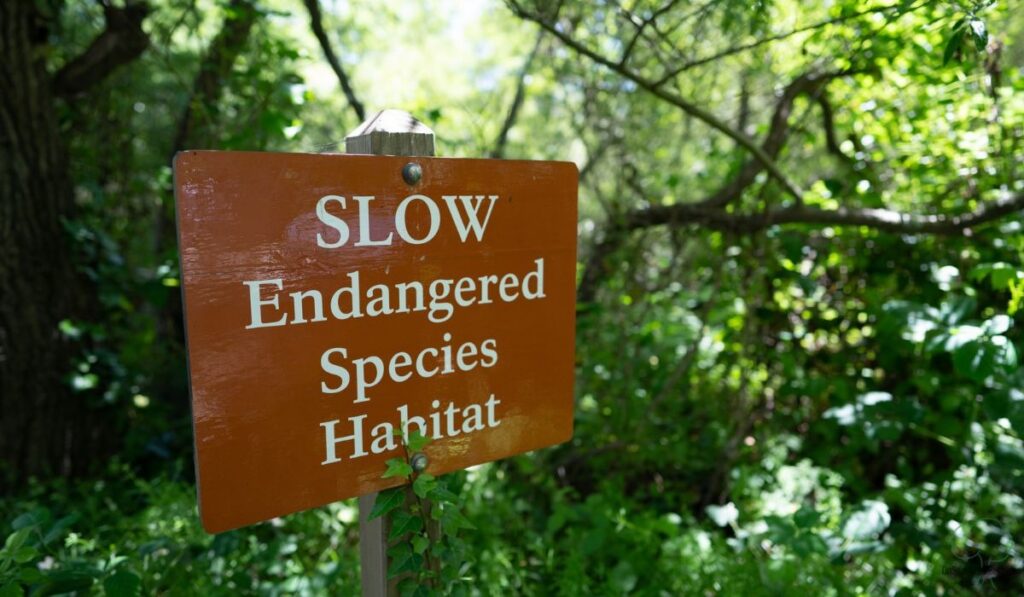
It’s not all doom and gloom, though. Conservation strategies built around connection tend to outperform ones built around isolated protection.
By “connection,” it refers to:
- Wildlife corridors linking protected forests
- Restoration projects that stitch fragmented patches back together
- National parks managed with the surrounding landscape in mind
- All of these give countless species a better shot at long-term survival.
Protecting one large, connected stretch of habitat generally does more good than defending several small, cut-off pieces of the same size. Whole, connected systems support wildlife much better than small, isolated pockets.
From Global Loss to Local Land: How Does Deforestation Affect Humans?
The answer shifts with place and scale. Direct dependence comes first, then physical land changes follow. Urban settings close the loop.
Communities That Depend Directly on Forests
Local and Indigenous communities draw daily support from forests. Needs often include food, water, fuel, and medicines. Building materials, agriculture, income, and cultural traditions
also rank high.
With forest loss, livelihoods and food security are also lost. Ecosystems feel the hit too. Different groups rely on forests in distinct ways, and no single story covers every case.
One clear example appears in regions where mixed forest products supply both meals and market goods. Loss there raises real pressure on daily life.
Soil Erosion, Water Runoff, and Land Stability
Tree roots and forest vegetation hold soil in place. They slow water and keep structure sound. When substantial cover disappears, exposed soil faces higher risk of soil erosion. Fertile
topsoil may wash away.
Soil structure can weaken. Runoff rises, with water moving faster across the surface. In vulnerable terrain, these shifts can result in flooding, landslides, or other natural disasters.
But scale, terrain, soil conditions, and remaining cover may all help decide the outcome. So, not every removal means trouble. Still, soil degradation hurts soil health and agricultural productivity over time. Simple buffer strips along slopes offer one practical example of steady ground.
What Global Forest Loss Can Teach Us About Urban Tree Canopy
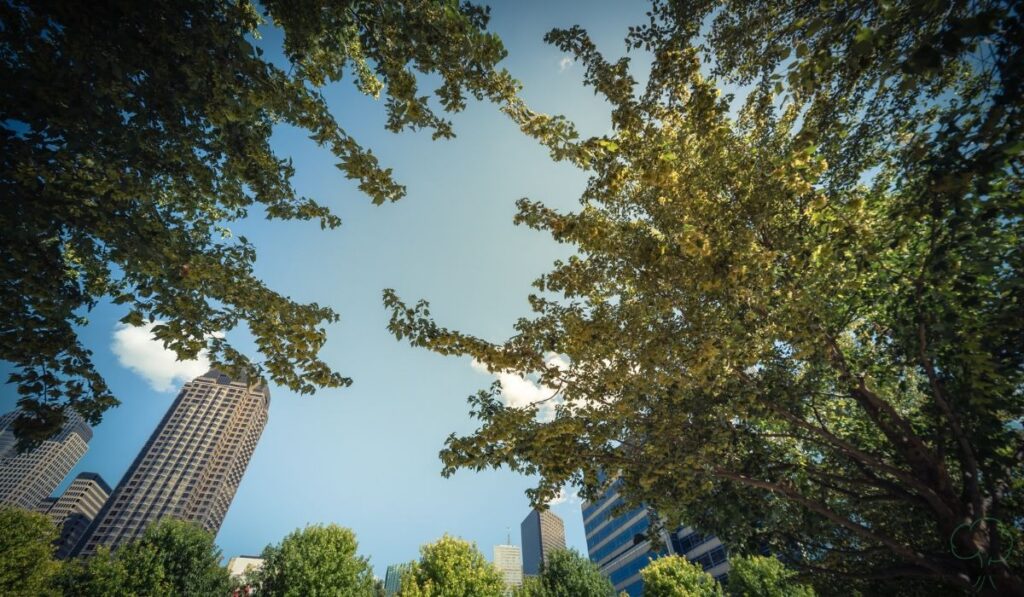
Single trees being removed in urban areas is different from tropical clearing. Yet some services stay similar, even at smaller scales. Urban trees provide shade and intercept rainfall, as
trees everywhere do.
They reduce runoff and stabilize soil. They also supply wildlife habitat and moderate local temperatures. Extensive canopy loss from development, storms, disease, or repeated unnecessary cuts can harm neighborhoods.
Urban expansion is often the culprit. In urban areas like Fort Wayne, the local environment feels the difference when nature cover thins. Streets grow hotter. Storm water moves faster. That’s why keeping a healthy canopy where it fits helps neighborhoods anywhere stay steadier.
Combating Canopy Loss: How Property Owners and Communities Can Protect Trees
Change comes with clear choices on the ground. Conservation paired with smart use. That’s the ticket. The main players here are property owners and communities. Both hold tools that
work.
Sustainable Forest and Land Management
It’s clear. To reduce needless loss, careful land use and conservation are keys.
Also:
- Responsible forestry keeps harvests in check.
- Sustainable land-use planning guides growth.
- Restoring degraded land brings cover back.
Illegal logging has to stop to protect the remaining cover. Easier said than done, but sourcing forest products with care is a start.
The Forest Stewardship Council stands as one example of a system that supports better practices.
These steps form sustainable land use practices that keep forest land productive. Infrastructure projects can still move forward when planners weigh tree cover early. Sustainable practices prove their worth when they limit waste and keep soils working.
Protecting Mature Trees at the Property Level
Homeowners, commercial owners, municipalities, and HOAs all shape canopy. Together, they help maintain healthy mature trees where they fit. They can promote planting native or regionally suited species.
They can also:
- Replace trees lost to storms or disease.
- Skip unnecessary clearing.
- Factor mature canopy into construction plans.
- Preservation never means every tree stays forever.
- Diseased, unstable, dead, or hazardous trees may need removal.
One useful example shows up in site reviews that map keepers before any work begins. That early look saves strong trees and avoids later surprises.
When Professional Tree Assessment Matters
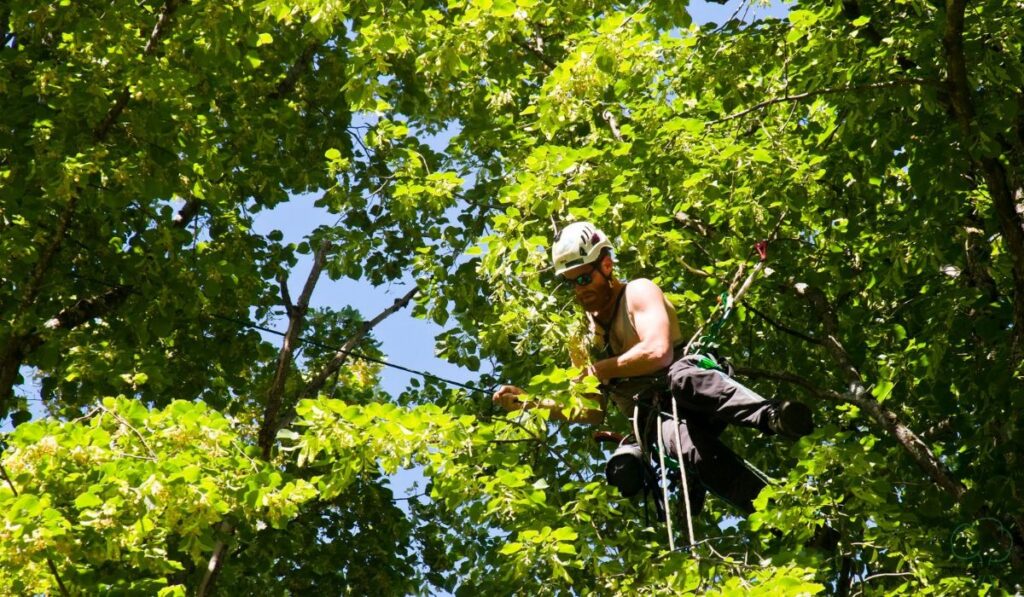
A qualified arborist can evaluate a mature tree before any removal decision. The review sorts manageable health issues from structural concerns. It flags genuine hazards and confirms trees
that can stay. Because clear data beats guesswork every time.
Would you rather act on a solid report or on a quick visual guess? The first path protects both people and the canopy.
Final Thoughts
4.3 million hectares lost in a single year. Eleven football fields of forest disappearing every minute. Those statistics can feel distant. But the story doesn’t end in the Amazon or Southeast Asia. It connects directly to the trees outside your window.
When we lose healthy forests, we lose more than timber or scenic views. We lose climate stability, wildlife habitat, clean water, and fertile soil.
The effects ripple through every system that supports life on this planet. And those effects don’t stop at the forest boundary. They reach into our own neighborhoods.
The good news is, we can make better choices. Protect forests at every scale. Support responsible forestry and sustainable practices that reduce unnecessary clearing. On your own property, care for mature trees. Plant suitable replacements.
Make informed decisions before removing anything. Small actions add up when we take them together.
A healthier local environment starts with awareness and follows with action. Visit our homepage to learn more about tree stewardship. The work of preserving canopy cover happens one tree at a time. And every tree counts.