



If you think that old tree stump sitting in your yard is harmless, think again. It may not fall on anyone, but it’ll sit there rotting for years, and every one of those years it’s a shelter pests love.
Termite control alone costs Americans more than $1.5 billion annually, according to Rutgers Cooperative Extension, and an old tree stump is exactly the kind of habitat termites are drawn to.
No yanking a stump out with a truck and chain. No renting a grinder you’ll use once and never touch again. Digging it out by hand sounds simple until (speaking from experience) your back reminds you it isn’t, and a professional job isn’t always in the budget.
There’s a better way. This guide walks you through how to remove a tree stump with Epsom salt, a slow but natural and eco-friendly method that works with time instead of brute force.
Unlike other DIY methods that demand hours of labor, this one just asks for patience. By the end, you’ll know exactly what this approach involves and whether it fits your stump removal plans.
This isn’t the only path forward, either. If you’ve already read our piece on potassium nitrate stump remover, you know chemical accelerants speed things up but come with tradeoffs epsom salt avoids.
And if patience isn’t your strong suit, our guide on how to remove a tree stump by hand covers a faster, sweatier route.
For the full picture on every option available to you, our pillar post on how to get rid of a tree stump rounds up every method worth knowing before you pick up a shovel.
Short Summary
- Epsom salt offers a simple natural way to kill and rot a tree stump over time.
- Drill holes, pack with salt, cover, and repeat every few weeks.
- This eco-friendly stump removal method works well for patient homeowners.
- Call professionals for large, infested, or urgent jobs.
- Protect your surrounding soil and plants with careful application.
The Science: How Epsom Salt Breaks Down a Tree Stump
Some folks swear by Epsom salt for stump removal, and do you know why? The answer comes down to chemistry. Epsom salt is magnesium sulfate, a compound that pulls moisture from living wood cells.
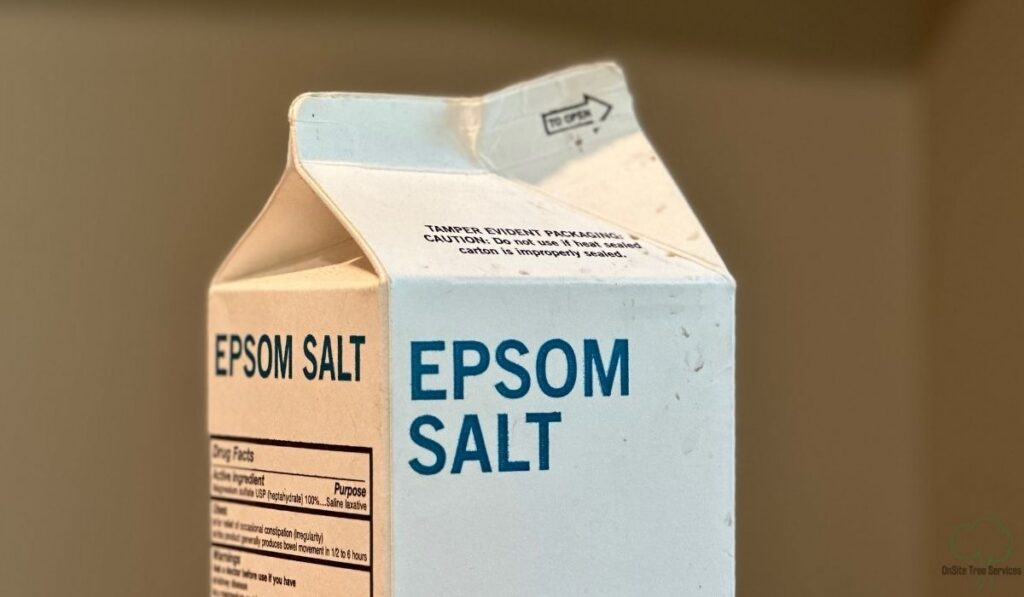
This dehydration process stops new growth at the cellular level. Without water, the tree roots can no longer transport nutrients. The root system slowly starves, and the wood begins to decay.
Rock salt works differently. Sodium chloride, the stuff in rock salt, draws moisture from soil and other plants too. It leaves behind toxic sodium ions that damage your surrounding soil for years.
Magnesium sulfate actually adds usable nutrients back into the ground. That makes it a smarter choice for your yard and environment.
Many homeowners ask about potassium nitrate stump remover. That chemical speeds up decay by feeding wood-eating fungi. But it can leach into groundwater and harm nearby vegetation.
Diesel fuel is even worse. It soaks into the soil, kills beneficial microbes, and poses a fire hazard. Neither option fits a truly natural approach. Epsom salt simply breaks down the wood fibers without poisoning your property.
So what sets the pace for this whole process? Stump size and wood hardness. These determine how fast the rot sets in. A soft pine stump might break down in half the time of a dense oak.
You know what they say: The bigger the stump, the longer the kill takes. This matters for setting realistic expectations. We will cover those timelines in detail later.
How to Remove a Tree Stump with Epsom Salt, Step by Step
Before you start, gather the right gear. You’ll need a drill with a half-inch to one-inch bit. The bit should be at least eight inches long. A chainsaw or handsaw works for cutting the stump low. A reciprocating saw serves as a handy backup for tight spots.
Pick up a bag of Epsom salt and have hot water ready. A tarp or dark garbage bag will seal the stump. A shovel and some mulch help with the final cover-up.
Step 1: Cut the Stump to Ground Level
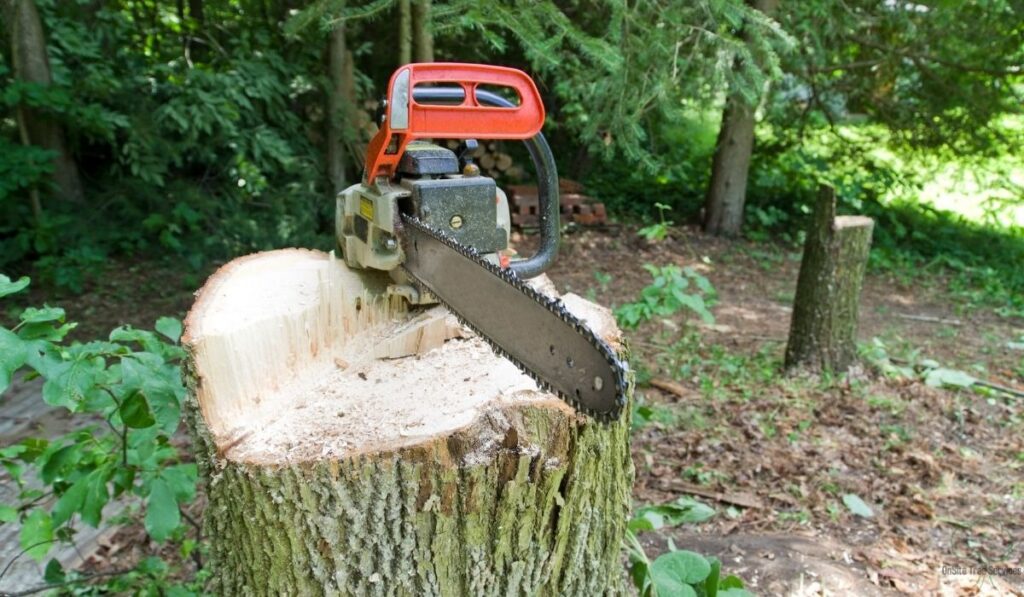
Use your chainsaw to slice the stump as flat as possible. A low cut gives you maximum surface area for the drilling method. The closer to ground level, the easier the process becomes. If the stump sits uneven, level it off with your saw.
Step 2: Drill Several Holes Into the Wood
Take your drill and bore several holes across the top. Space these holes three to four inches apart. Go at least eight inches deep for best results.
Focus on the outer edges too. The living tissue that transports water sits just beneath the bark. Those outer edges need drilled holes just like the center does. More holes mean faster absorption of the Epsom salt.
Step 3: Fill the Holes and Hydrate
Pack each drilled hole full of Epsom salt. Pour hot water over the top to dissolve the salt and carry it down into the wood. The hot water opens the wood pores and speeds absorption.
Saturate until the salt stops dissolving and pools on the surface. This gives the entire stump a concentrated dose of magnesium sulfate.
Step 4: Cover and Seal the Stump
Place a tarp or dark garbage bag over the stump. Secure it with dirt or stones around the edges. This blocks sunlight and rain from reaching the wood. It traps heat and moisture inside, accelerating the decay process. A dark cover also prevents new shoots from sprouting.
Step 5: Reapply Every 3–4 Weeks
The process does not stop after one treatment. Reapply Epsom salt and hot water every three to four weeks. Check the drilled holes and top them off as needed. Keep the tarp secure between treatments.
This repeated application ensures the entire stump stays saturated until the wood breaks down completely.
Timeline, Soil Safety, and Protecting Surrounding Plants
Patience is the real cost of this method. Let’s give you a realistic picture of what to expect. We will also cover how to protect your garden and avoid legal trouble with open flames.
How Long Stump Decay Actually Takes
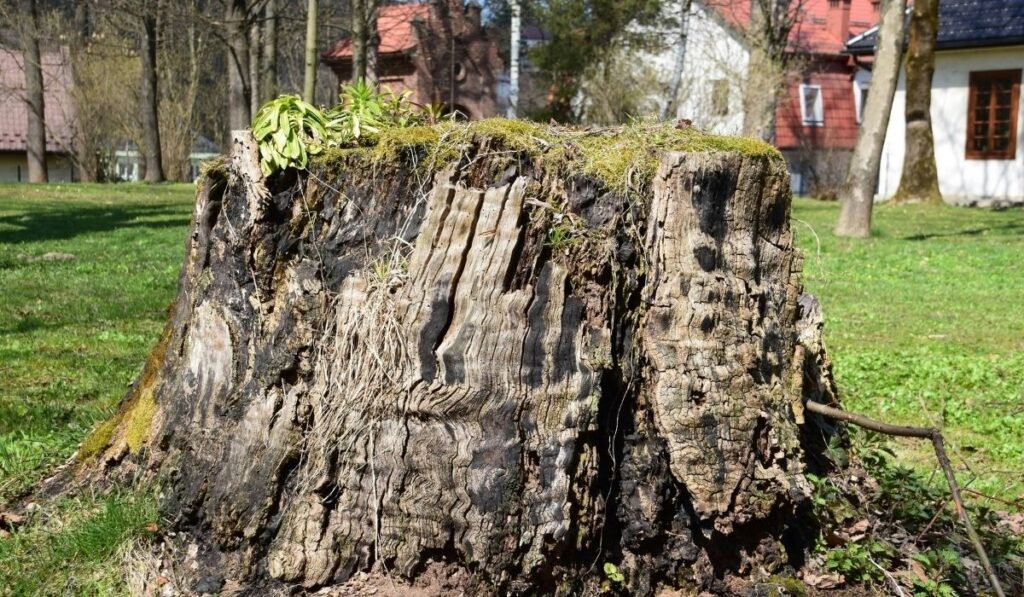
Softwoods like pine or cedar take roughly six to twelve months to rot through. Hardwoods such as oak or hickory can take up to two full years. The wood density makes all the difference. A twelve-inch pine stump might be completely dead within eight months.
A similarly sized oak will need closer to eighteen months. The several-month timeframe only applies to the initial kill phase. A full breakdown requires much longer.
Keeping Magnesium From Harming Nearby Plants
Epsom salt in small amounts acts like a top dressing for your soil.
It adds magnesium that plants actually use. But excessive runoff can still harm your lawn or flower beds. We recommend applying salt only inside the drilled holes, not over the entire stump surface.
This keeps the concentration localized. Position your tarp to direct rainwater away from desirable surrounding plants. A simple slope of the cover does the trick.
Why Burning a Stump Isn’t a Legal Shortcut
Many homeowners ask about setting a stump on fire. Well, you should remember that Fort Wayne and most Indiana municipalities restrict open burning.
Local ordinances prohibit burn operations without a permit. Burning isn’t exactly good for air quality, not to mention that it’s a huge fire hazard.
Besides, even a single complaint from a neighbor results in a fine. The burn method also leaves an unsightly hole and charred soil. Our advice? Skip the flames and stick with the slow-rot approach.
Signs the Root System Is Fully Dead
How do you know when the job is done? The wood turns brittle and crumbles when you strike it with a shovel. No new shoots or suckers emerge from the soil around the stump. The bark peels away easily from the dead wood.
These signs tell you the root system has finally broken down enough to remove manually. At that point, you can physically remove the remaining chunks with a digging bar or axe. The dead stump has done its rot, and your job is finished.
When to Skip DIY and Call a Professional
Make no mistake, DIY has its limits. Here are the situations where a stump grinder makes more sense than a bag of salt.
Pest Risks From a Decaying Stump
A stump left to rot for months becomes a magnet for pests. You know those carpenter ants? They love snacking on that soft, damp wood. Also, termites can travel from the stump to your home’s foundation, no problem.
If the stump sits near wooden posts or structural supports, the risk multiplies. We’ve seen decks and fence lines infested from an untreated stump just a few feet away. The cost of pest control often exceeds the price of professional removal.

When a Stump Is Too Close to Your Foundation
Stumps within three to four feet of your house are bad candidates for slow decay. The roots can continue to draw moisture and shift soil over time.
This movement can crack basement walls or lift concrete walkways. A slow rot process gives the roots time to heave and settle unpredictably. Professional stump grinder equipment removes the wood quickly and stabilizes the ground.
When You Need the Space Right Away
Maybe you want to install a new planter or pour a patio next month. Waiting a year for the stump to rot does not fit that schedule. A stump grinder clears the area in under an hour. The job gets done and you can start your landscaping project immediately.
Weighing Time vs. Cost
Epsom salt is practically free in material costs. A single bag costs less than ten dollars. But time is money too. A professional stump grinder can physically remove the stump in minutes.
The trade-off comes down to your timeline and tolerance for a slow process. Removing tree stumps with salt works beautifully for patient homeowners with small stumps. For everyone else, a pro call is the smarter play.
Final Thoughts
Epsom salt gets the job done. It’s cheap, it’s natural, and it’s about as eco-friendly as tree stump removal gets. All it asks for in return is time.
Not every stump fits this process, though. Big ones, infested ones, or ones sitting too close to your foundation deserve a second look.
If yours checks any of those boxes, or you’d rather skip the hands-dirty approach altogether, our crew at OnSite Tree Services in Fort Wayne is ready to help you get rid of it. Stop by our homepage anytime to see how we can clear your property for good.