

Fort Wayne takes its trees seriously. The city manages roughly 50,000 trees along public right-of-way and another 20,000 spread across its 89 parks. That’s a lot of canopy, and a lot of potential for disputes.
From our experience, the most frustrating situations start close to home: a neighbor’s tree dropping debris on your driveway, branches scraping your roof, roots buckling your fence. Who handles that? Who pays?
That’s exactly what tree law in Fort Wayne answers. It’s a body of common law and case law that defines property rights between neighbors and balances private interests with community safety.
This guide walks through the general principles Indiana courts follow, for informational purposes only, and does not establish an attorney-client relationship.
If you’re interested in the environmental side, check out our guide on deforestation facts
Short Summary
- Indiana tree law starts with the trunk location to settle ownership.
- Boundary trees on the property line require both neighbors to agree on tree maintenance or tree removal.
- You can use the self help remedy to trim trees and branches from a neighbor’s tree, but stay on your side and avoid harm.
- Healthy falling trees usually fall under the act of God rule, so your own insurance covers the cost.
- Fort Wayne city rules govern public right trees along public street areas with specific clearance heights.
The Trunk Rule: How Indiana Determines Tree Ownership
Ownership starts at ground level. Specifically, it starts at the trunk. Wherever that trunk base emerges from the land, that’s who owns the tree. Simple rule, but it causes more confusion than you’d expect.
Sole Ownership
If a trunk sits entirely on one private land parcel, that landowner is the sole tree owner. Full stop. That means full rights to the tree’s value, its removal, and the shade it provides. It doesn’t matter if the canopy hangs halfway over the neighbor’s yard.
The Overhanging Canopy Misconception
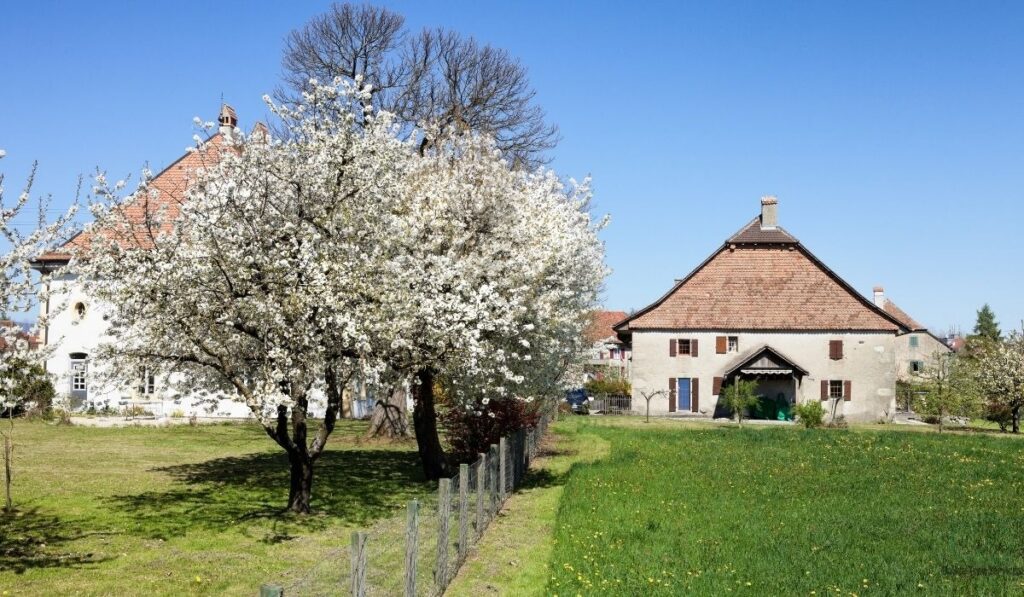
Here’s the part most people get wrong. Vegetation growing out over a neighboring property doesn’t transfer ownership. The canopy can stretch as far as it wants. The owner of the land holding the trunk stays the legal owner.
Generally speaking, this holds true across a suburban subdivision or a rural area. Own property, own tree.
Indiana Boundary Tree Law: When the Trunk Straddles the Line
Most trees fall clearly on one side of a property line. Then there are boundary trees, and that’s where things get more complicated. Here’s what Indiana case law says about them.
Defining a Boundary Tree
Under Indiana case law, specifically Luke v. Scott, a tree with a trunk that straddles the exact boundary line is classified as a boundary tree. Both neighbors become co-owners, technically tenants-in-common.
That means shared rights and shared responsibilities. Think of it like jointly owning a fence that happens to be alive.
Consent Requirements for Maintenance and Removal
Boundary tree law removes the option of going solo. One property owner cannot authorize tree maintenance, tree removal, or heavy trimming without the other’s explicit agreement. This applies to planted trees, too.
If someone planted a tree meant to grow along a shared boundary line, that neighbor should have given prior approval. Skipping that step is how small landscaping decisions turn into real property line disputes.
The Self-Help Remedy: Your Right to Trim Without Trespassing
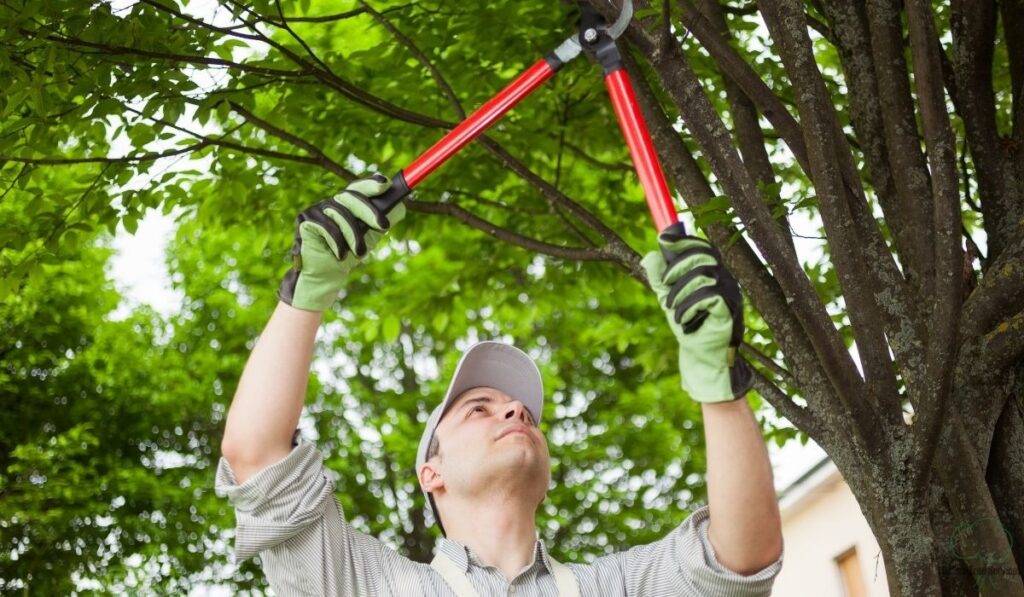
Good news: you have options. Indiana recognizes a self-help remedy that gives property owners the right to trim trees and cut back branches, limbs, and roots that cross into their space.
No court order needed, and no permission slip from next door. That said, this right comes with real limits worth knowing before you pick up a chainsaw.
The “Do No Harm” Rule
The self-help right stops where the tree’s health begins. Trimming cannot compromise structural integrity, endanger tree’s health, or create dangerous conditions. Any cut that kills or severely damages the tree puts you on the hook for civil liability.
As the old saying goes, “Good judgment comes from experience, and experience comes from bad judgment.” So don’t let a hasty trim become a costly lesson!
Stay on Your Side: Avoiding Trespass
The self-help remedy must be executed entirely from your own property. A few key things to keep in mind:
Branches and roots can only be cut at your property line, not beyond it.
Crossing onto another’s property to trim, even with good intentions, constitutes trespass.
Forcing a neighbor cut without permission is not a legal option.
We always recommend hiring an ISA Certified Arborist for this work. They know exactly where the line is, literally and legally. That protects the tree, and it protects you.
Falling Trees and Storm Damage: Who Pays When Nature Strikes?
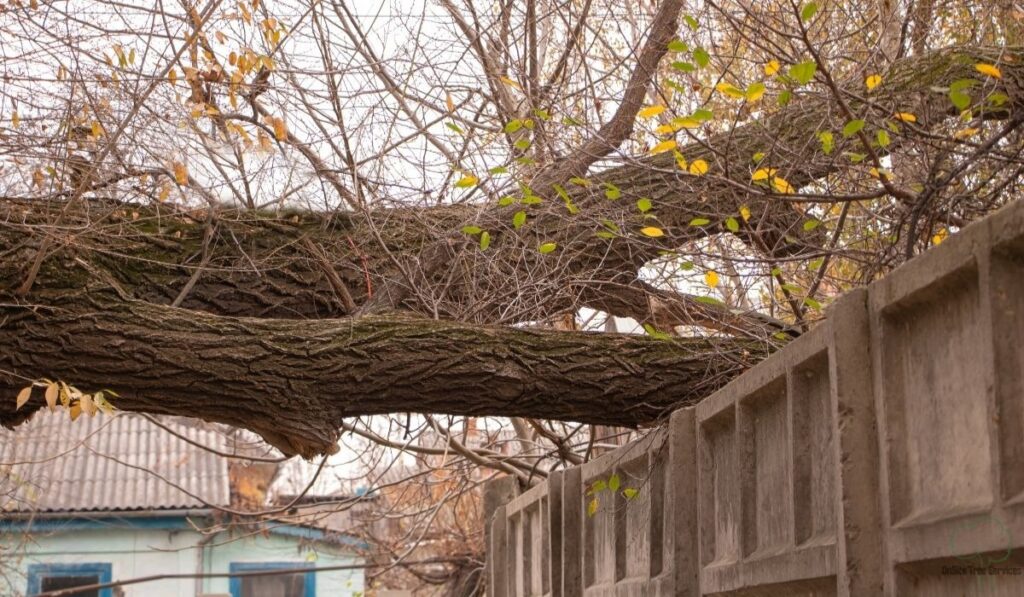
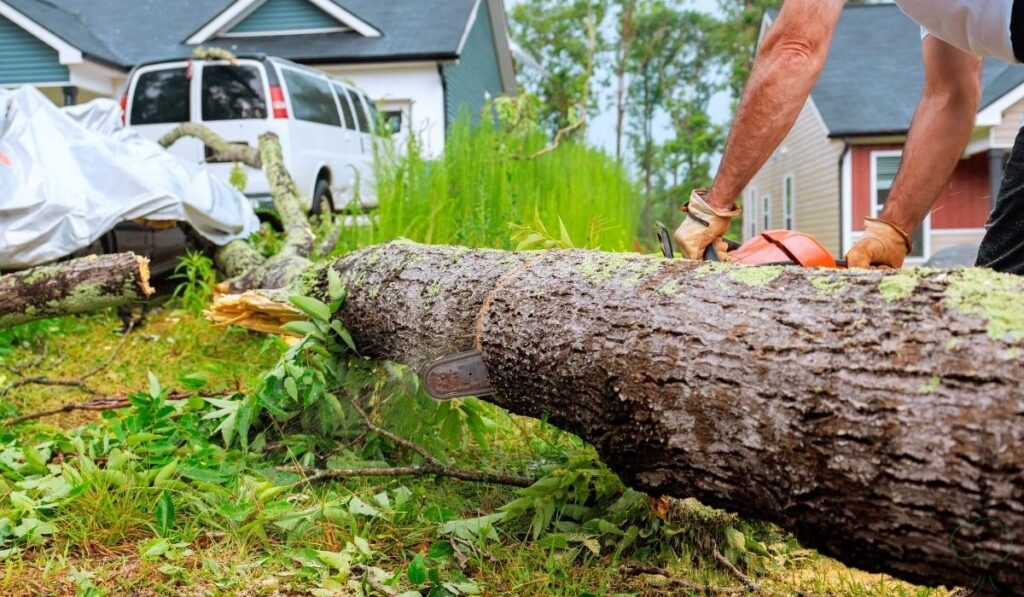
A storm rolls through Fort Wayne, and a tree falls onto your fence. Now what? The answer depends on one key factor: the condition of that tree before it came down. Indiana laws treat healthy trees and neglected ones very differently.
The Act of God Default
In most cases, a healthy tree toppling in a severe storm is treated as a natural condition of the land. Indiana law doesn’t automatically make your neighbor responsible for storm damage.
The cost of cleanup and repairs falls on the property owner whose land took the hit, typically covered through homeowner’s insurance. Nature gets the blame, not the neighbor.
When Negligence Shifts Liability
Liability shifts when a landowner knowingly keeps dead trees or visibly rotted hazard trees standing. Here’s where documentation becomes your best friend:
- Send formal written notice to your neighbor if their tree poses a clear nuisance or risk of harm.
- Keep a dated copy of that notice for your records.
- If they fail to maintain it and the tree falls, they can face full liability for injuries caused and damages caused by those falling trees.
A written notice costs nothing. A lawsuit costs plenty.
Fort Wayne Ordinances: Public Right-of-Way, Sidewalks, and Utility Lines
Living in Fort Wayne means sharing the canopy with the city. Some trees on or near your property aren’t actually yours to touch. Knowing the difference between city-managed trees and your own keeps you on the right side of local laws.
Street Trees Are City Property
Any tree along a public street or public roadway falls under Fort Wayne City Forestry’s management. Property abutting those zones has zero authority to trim, remove, or alter those trees.
The City of Fort Wayne Municipal Code is clear: written municipal permission is required first. No permission, no cutting. That’s it.
Clearance Requirements and Utility Lines
For trees on your own parcel, Fort Wayne holds property owners to specific clearance standards:
- Maintain 8 feet of vertical clearance over sidewalks.
- Maintain 14 feet of clearance over traveled street surfaces.
- Utility lines near main power lines are handled by the city or utility provider.
- Service drops running to your home are the landowner’s responsibility to keep clear.
One more thing worth knowing: if you have an empty spot along the street, Fort Wayne’s Citizen Match Tree Planting Program has roughly 40,000 available public right-of-way sites. It’s a solid way to add shade and greenery the right way, with full city backing.
Final Thoughts
Indiana tree law gives every property owner clear rights. But knowing the rules and laws is only half the equation. The other half is how you handle it. A conversation with a neighbor will always cost less than a court order.
A civil court battle can impose liability, hurt market value, and even trigger a restrictive covenant claim nobody saw coming.
Skip the guesswork. A certified arborist can assess removal risks, confirm legal compliance, and help you decide the safest path forward.
Visit OnSite Tree Services to schedule a professional evaluation and protect the long-term value of your property, without making an enemy next door.
Frequently Asked Questions
Disclaimer: This article is for general informational purposes only and does not constitute legal, insurance, or professional advice. Policies, laws, and circumstances vary, and readers should consult qualified professionals before making any decisions. OnSite Tree Services is not responsible for any actions taken or not taken based on the information provided and assumes no liability for errors, omissions, or outcomes related to this content.