


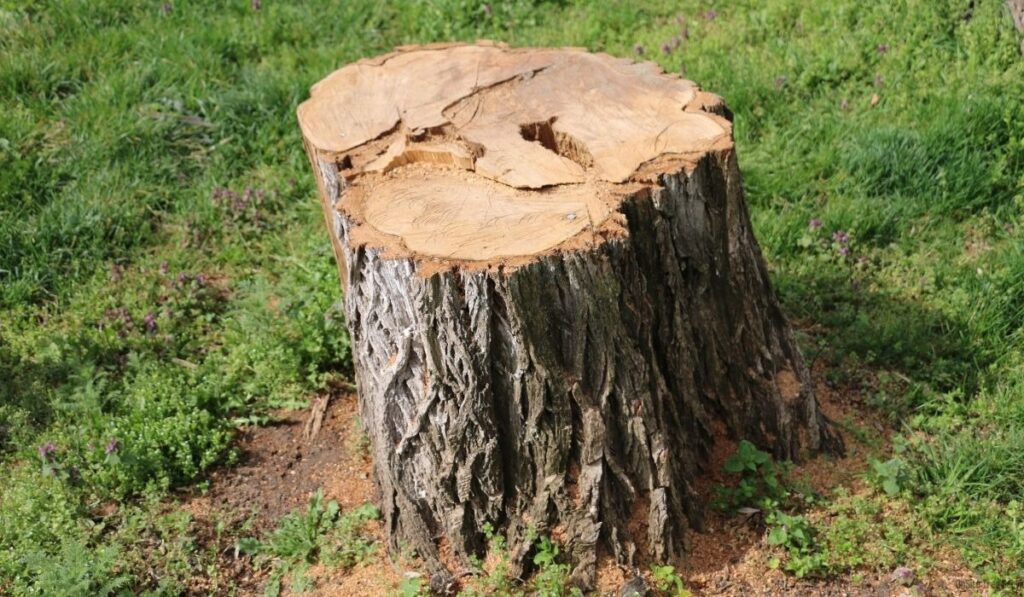
That rotting stump left in your yard isn’t just an eyesore. Termites love decaying wood, and each year they cause billions of dollars in structural damage across the country.
Property owners spend over two billion dollars annually just to treat infestations that often start in old unwanted tree stumps. From our experience, ignoring a stump puts your garden and home at risk.
That’s why learning how to kill a tree stump naturally in Fort Wayne is one of the smartest, eco-friendly moves you can make. We’ll walk you through simple methods to reclaim your space without harsh chemicals.
In our previous guide, we answered “Does tree removal include the stump?” for those starting fresh. If you want a faster chemical option, our next article covers potassium nitrate stump remover in detail.And for the complete picture, our post on how to get rid of a tree stump ties everything together.
Short Summary
- Epsom salt is the most reliable way to kill tree stumps naturally
- Drill holes, fill with salt, and cover to speed up the process
- Light deprivation works well for low-effort removal over a few months
- Vinegar offers a natural option instead of harsh chemicals
- Natural decay using mulch and wood chips improves soil over time
- A controlled burn is faster but requires caution and proper tools
- Large stumps may need stump grinding for faster results
What Is the Fastest Way to Kill a Tree Stump Naturally?
Short answer: the Epsom salt method.
We drill holes deep into the stump, fill them with magnesium sulfate, and seal the surface with a plastic sheet or heavy-duty tarp. Over the next few months, the salt pulls moisture from the root system, leaving the wood brittle and dead.
A garden hose adds water to help the salt penetrate. For a fresh stump, this is your speediest chemical‑free option.
The Best Natural Methods to Kill a Tree Stump
Below we break down five proven methods. Each approach suits different yards and patience levels.
Method 1 – Epsom Salt Method (Most Effective DIY Option)
Epsom salt is magnesium sulfate; it’s not the same as rock salt. Rock salt can harm nearby soil, while magnesium sulfate is gentler on surrounding plants. We use a drill bit to make several holes about eight inches deep.
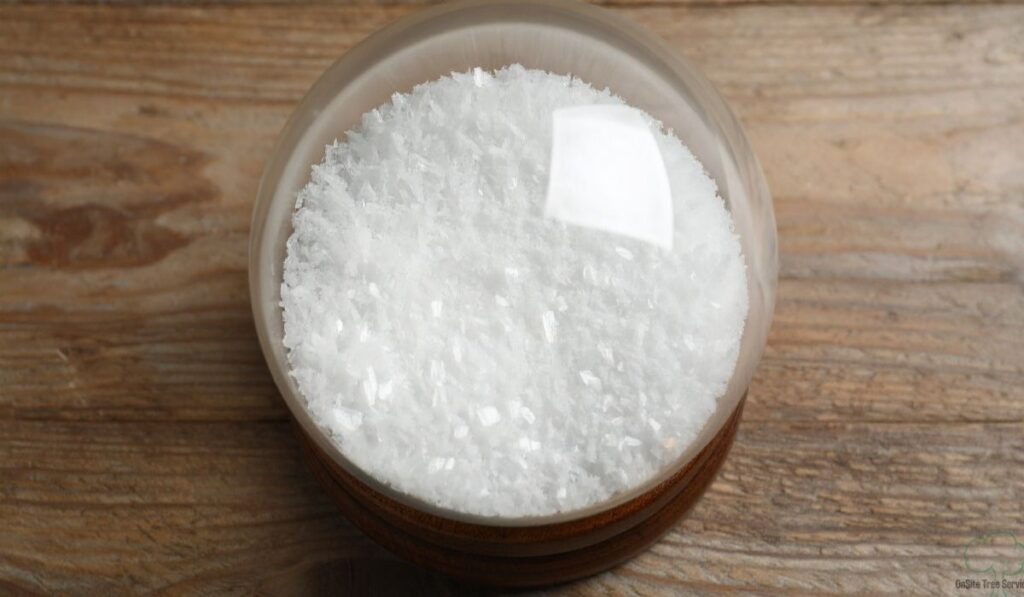
A center hole angled slightly downward works best. After filling each hole with salt, we pour water from a garden hose to dissolve it. Then we cover the stump tightly with a plastic sheet or heavy duty tarp to prevent rain from washing the treatment away.
Why does it work? The salt draws moisture out of the root structure, essentially starving the stump of what it needs to send up new shoots. We typically see full die‑back in two to three months.
The bonus: nearby plants and nearby vegetation stay safe as long as you keep the salt contained inside the holes. One homeowner we worked with used this on a stubborn elm stump and watched the sprouts stop within weeks.Method 2 – Light Deprivation (Best Low-Effort Method)
A simple tarp or heavy plastic sheet can do the job if you’re willing to wait. We secure the cover over the stump and anchor the edges with stones or soil. Without sunlight, the stump can’t fuel new growth.
This method works especially well for stumps close to other trees where digging might damage roots. It also handles those annoying sucker shoots that keep popping up around the base.
Expect it to take a few months to kill a tree stump completely, but the effort is minimal. We often recommend this for weekend warriors who want results without constant maintenance.
Method 3 – Vinegar Method (Natural Herbicide Alternative)
White vinegar works, but horticultural vinegar contains a higher concentration of acetic acid and delivers a faster punch. We pour it into a spray bottle and saturate the freshly cut surface of the stump.
The acid pulls moisture from the wood and disrupts cell walls. It’s a solid choice when you want to avoid herbicides full of harsh chemicals. One caution: this method works best on young, small stumps. A massive oak might shrug it off.
For those, we combine vinegar with drilling to give the acid deeper access. It’s not an instant fix, but it reliably stops the stump from sprouting again.
Method 4 – Boosting Natural Decomposition (Most Eco-Friendly Option)
This approach speeds up what nature already does. We pile wood chips, mulch, and soil over the stump to create a cozy environment for fungi and insects. The fungi break down the wood over time.
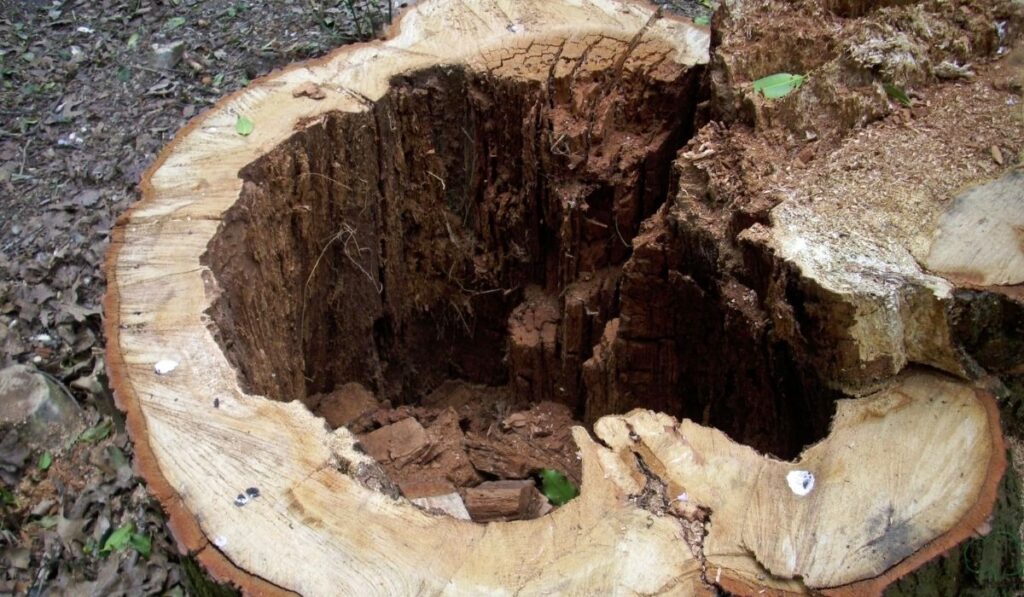
You can also add a nitrogen source like grass clippings to accelerate the process. The entire stump and its roots slowly return to the ground. It takes the longest, often a year or more, but it enriches your dirt and requires no heavy work after the initial setup.
We like this for stumps in out‑of‑the‑way corners where patience is a virtue.
Method 5 – Controlled Burn (Fastest but Requires Caution)
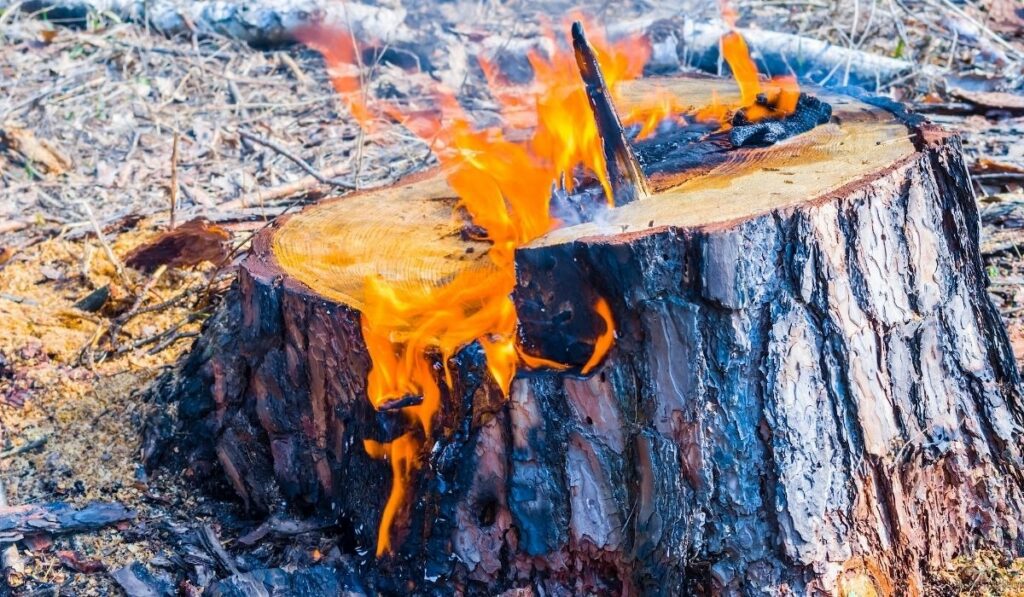
A controlled burn can reduce a stump to ash in hours, but only where local laws permit and safety comes first. We start by drilling deep holes and packing them with potassium nitrate to help the wood burn thoroughly.
Before we strike a match, we make sure safety gear is on, a fire extinguisher is ready, and a garden hose is within reach. We also dig around the stump to expose main roots and clear away any flammable material.
A shovel helps us manage the burn and extinguish embers afterward. Mind you, this method isn’t for the casual DIYer, but when conditions are right, it’s the fastest way to rid your property of a stubborn stump.
Which Method Is Best for Your Situation? (Quick Comparison Guide)
Not every method suits every yard. Your choice comes down to speed, safety, effort, and what is growing nearby.
- Epsom salt: Best all‑around. Moderate effort. Safe near surrounding plants. Takes 2–3 months to effectively kill the root system.
- Light deprivation: Lowest effort. Ideal for stumps away from high‑traffic areas. Patience required; results in 4–6 months.
- Vinegar: Quick initial impact. Great for small stumps. Less effective on deep root systems.
- Natural decomposition: Most ecofriendly. Slowest process. Perfect for out‑of‑the‑way spots where you can let nature handle things.
- Controlled burn: Fastest but demands strict safety. Only where local codes allow.
If your yard has kids, pets, or prized flower beds, the gentler options win. For pure speed with caution, the burn method delivers.
Tree Stump Removal Methods: Comparison Table
| Feature | Epsom Salt Method | Tarp/Light Deprivation | Stump Grinding |
| Primary Goal | Effectively kill the root system via dehydration. | Stop new growth by starving the tree of light. | Immediate physical tree stump removal. |
| Timeline to Kill | 2–4 Months (requires reapplication). | 6–12 Months. | Instant (30–90 minutes). |
| Timeline to Rot | 6–12 Months for natural decomposition. | 12–24 Months for total decay. | N/A (Stump is turned into wood chips immediately). |
| Eco- friendly? | High (Adds magnesium sulfate to soil). | High (Zero additives used). | High (Creates organic mulch). |
| Risk to Plants | Low (If kept from nearby vegetation). | None (Targeted only to the stump). | Minimal (Localized to the stump area). |
| Physical Effort | Moderate (Must drill holes and fill). | Low (Just cover the stump tightly). | Zero (Handled by a certified arborist). |
| Cost | $10 – $30 (Salt + Drill bit). | $15 – $40 (Heavy duty tarp). | $150 – $450 (Professional service). |
| Best For | Patient DIYers with small unwanted tree stumps. | Homeowners who don’t mind a tarp in the garden. | Instant results and reclaiming the lawn today. |
When to Call a Professional for Tree Stump Removal
We love a good DIY project, but some stumps are beyond what a drill and Epsom salt can handle. Take large stumps with sprawling root structures. One client had a silver maple with main roots that stretched under their driveway.
No amount of tarping or salt was going to touch that.
Another clear sign: stumps too close to structures. We once saw a homeowner try a controlled burn three feet from a wooden deck. That’s a fire hazard waiting to happen.
When a tree sits near your house, utility lines, or a pristine lawn, the smart play is to bring in a pro with a stump grinder.
A stump grinder is a machine that grinds the stump and its root system down below ground level. The operator can slowly lower the cutting wheel to turn the wood into mulch in a matter of minutes.
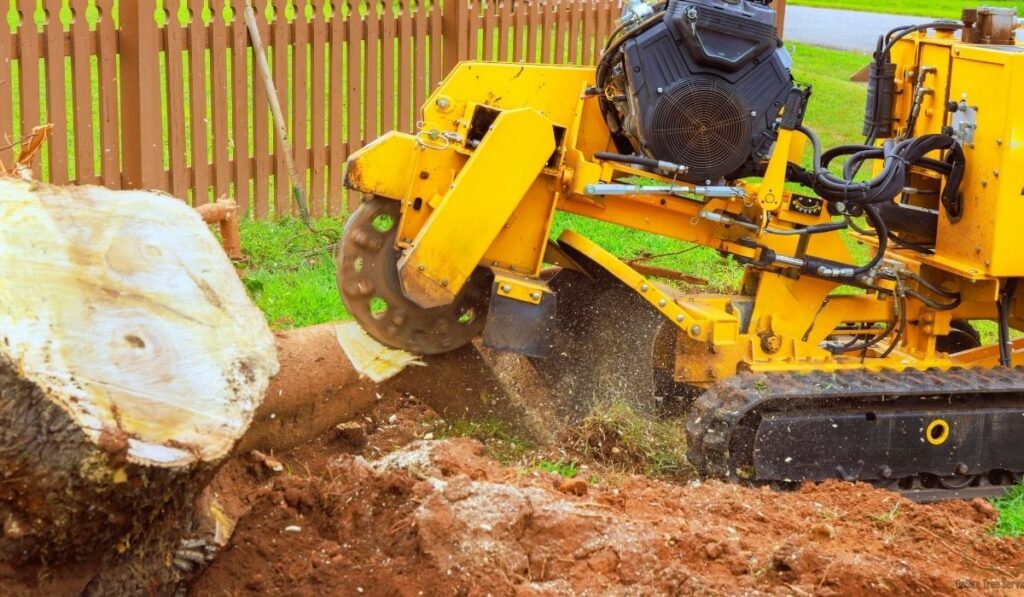
That mulch can then fill the hole or be spread around the garden. The job is clean, fast, and leaves no risk of damaging surrounding plants.
When you hire a certified arborist through organizations like the International Society of Arboriculture, you get someone who understands most conifers and hardwoods alike.
As a colleague once told us, “I’d rather grind a stump in twenty minutes than watch someone struggle for months.” We could not agree more. If the stump is massive, awkwardly located, or you simply want the peace of mind that comes with professional gear, make the call.
Final Thoughts
Eco-friendly ways to kill a tree stump give every homeowner solid choices for tree stump removal. The eco-friendly options we covered let you take control of your yard while keeping the garden safe.
Patience matters here – it makes all the difference in this process. Some stumps fade in a few months while others take longer. Pick the approach that matches your space and schedule.
We at OnSite Tree Services always say that the right method turns a chore into an easy win. If you want faster results, advanced options like potassium nitrate can help in certain spots.
Ready for a cleaner yard? Head over to our homepage for more practical garden tips and fresh ideas. We would love to see you there.