

Fort Wayne sees about 39 thunderstorm days each year, with roughly 10 of those turning severe. That’s a lot of wind and lightning rolling through northeast Indiana. So here’s the direct answer you came for: does homeowners insurance cover fallen trees in Fort Wayne?
A standard homeowners insurance policy generally pays when a covered peril like a storm or lightning causes the tree to fall. But the situation matters just as much as the cause. Where the tree lands often decides what your insurer will actually pay.
From our experience, many homeowners assume any downed tree means a check. That’s not true, though. Read on to learn exactly what your policy covers, what it excludes, and how to avoid costly surprises after the next big storm.
We recently covered tree falling on house deaths per year in a previous article. Next up, we’ll explain acts of God claims and how insurers view sudden weather events. And for the full legal picture, our main post dives deep into tree law.
Short Summary
- A standard homeowners policy only covers fallen trees if a covered peril like wind, storm, or lightning causes structural damage to your house, garage, or other insured structure.
- Tree debris removal has a separate payout limit of $500–$1,000 per storm. No damage to a structure means no coverage, except for blocked driveways or access ramps.
- When a neighbor’s tree falls on your property, you file through your own insurance unless negligence (ignoring a dead or rotting tree) can be proven.
- Preventative tree care matters. A neglected or diseased tree leads to a denied claim. Hire a certified arborist to lower your risk.
When Your Homeowners Insurance Covers a Fallen Tree
Not every downed tree triggers a payout. Your homeowners insurance cover only applies in three specific layers. Let’s break them down.

The Core Rule — Damage to a Structure
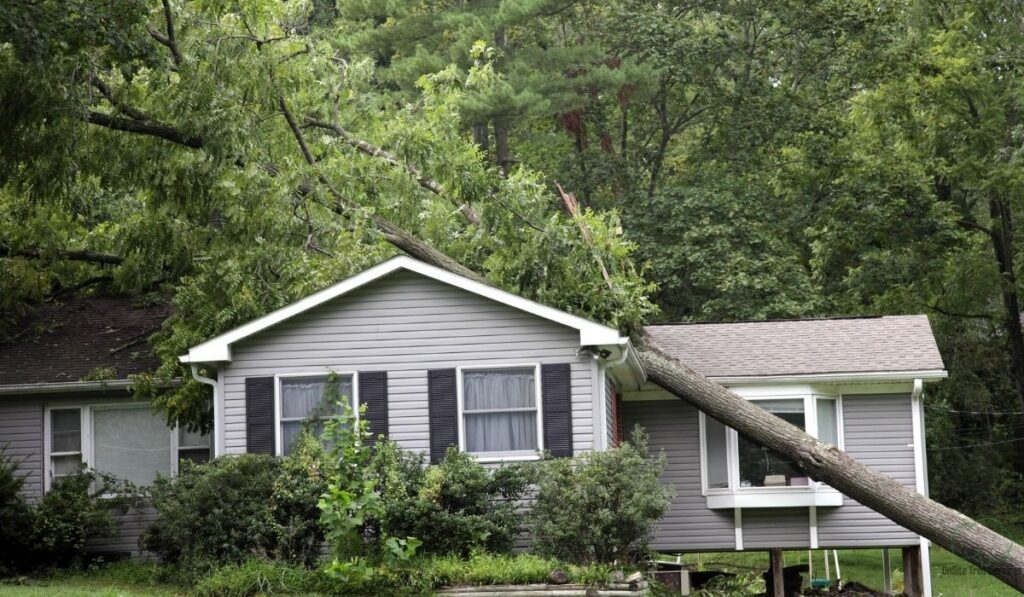
Here’s the big one. Home insurance only pays if the tree smashes something on your property. That means structural damage to an insured structure like your house, detached garage, shed, or even a building like a fence.
A tree lands on your roof? Covered. It crushes your garden shed? Covered. It falls on an empty patch of grass? Sorry, that’s on you.
The Catalyst — A Covered Peril
The fall needs a trigger. Your policy calls this a covered loss or covered peril. What counts?
- Severe wind
- An intense storm
- A direct lightning strike
But a dead tree that falls on a calm sunny day? Not covered. That’s neglect, not an accident.
Your Out-of-Pocket Deductible
Even when coverage applies, you pay the deductible first. The insurance company covers the remaining repairs up to your policy limit. A $1,500 repair with a $1,000 deductible means you only get $500 from the insurer. Check your cost before you file a small claim.
Tree Debris and Tree Removal Coverage
Tree removal and cleanup are separate beasts from structural fixes. Many homeowners get frustrated when they learn this. Let’s clear it up.
The Debris Hauling Limit
Most carriers cap debris removal at $500 to $1,000 per storm. That pays for hauling away tree debris after a covered loss. The actual removal of the trunk and branches falls under this separate limit.
So, a $5,000 roof repair might get full coverage, but you only get $800 to remove the wood.
The “No Damage” Exclusion
A healthy tree falling onto open ground usually falls outside standard coverage. No damaged structure means the removal expense often belongs to the homeowner.
We sometimes hear, “The tree missed the house by inches. Does insurance still help?” Usually not. Not the answer we want to hear, but there it is.
The Driveway Exception
One nice loophole: If branches or the trunk are blocking your driveway or a wheelchair ramp, many insurers pay for tree removal just to restore safe access, even without structural damage. Call your adjuster first. Then check out our emergency storm cleanup service for fast help.
What Happens When a Neighbor’s Tree Falls on Your Property?
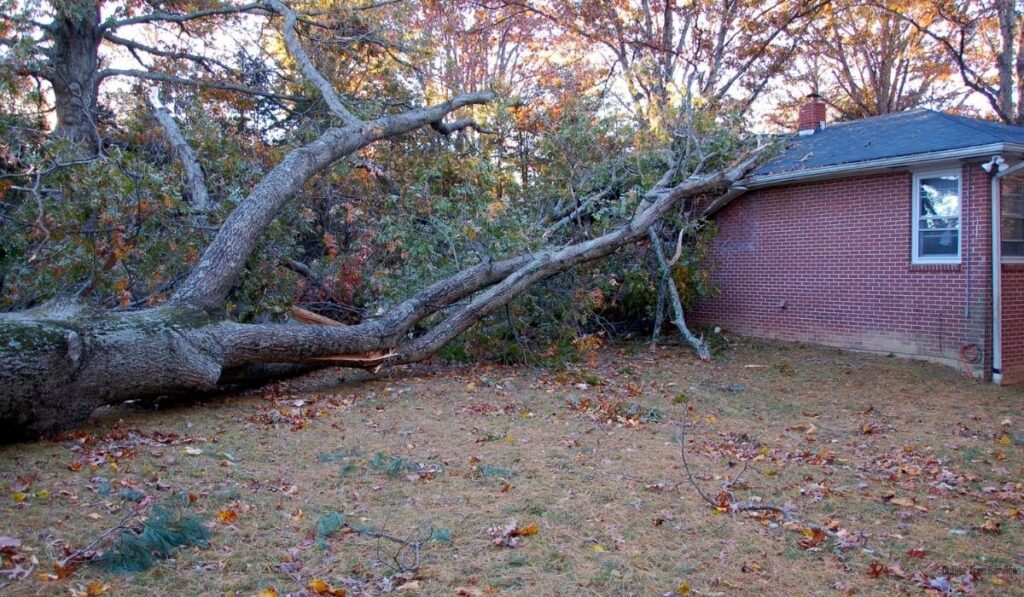
That big tree on the other side of the fence looks healthy. Until it doesn’t. A neighbor’s tree fell onto your garage. Now what? Here’s how property damages shake out in Fort Wayne.
Whose Policy Pays
You file through your own homeowners insurance. Full stop. It doesn’t matter whose neighbor’s property the tree came from. The neighbor isn’t automatically responsible for your claim. Your file goes to your insurer.
Here’s how it plays out: A tree crashing onto your roof, fence, or vehicle normally goes through your own policy first. Your insurer then reviews the damage, repair estimates, and storm details.
That’s why we often remind homeowners to avoid cleanup before adjusters arrive. One missing photo can complicate thousands in property damages.
When Negligence Shifts Liability
There’s an exception, though. Your neighbor becomes liable if they ignored a rotting or dead tree. That falls under negligence.
Your insurance company may then pursue their policy for the cost, but you need proof, like written complaints, or photos of the decay from months earlier. A certified letter works wonders. Without evidence, the situation stays with your own claim.
What to Do First
Act fast but smart.
Helpful first steps include:
- Photograph roof, siding, and yard damage
- Save receipts for emergency tarps
- Keep fallen limbs visible temporarily
- Trim limbs crossing your property line before future storms
Take wide photos and close-ups of the fall location. Contact your insurer before you clear a single branch. Then trim any overhanging limbs up to your property line. That cuts future risk down the road.
Why Preventative Tree Care Matters to Your Insurer
A storm feels like bad luck. Your insurer sees it differently. Let us connect the dots between tree health and your coverage.
The Maintenance Mandate
Insurance covers sudden disasters like fire or windstorms. It doesn’t cover deferred maintenance. A diseased or neglected tree means a denied claim. End of story.
It’s common for insurers to reject coverage after finding old rot, fungus growth, or major dead limbs.
Proactive Action for Northeast Indiana Homes
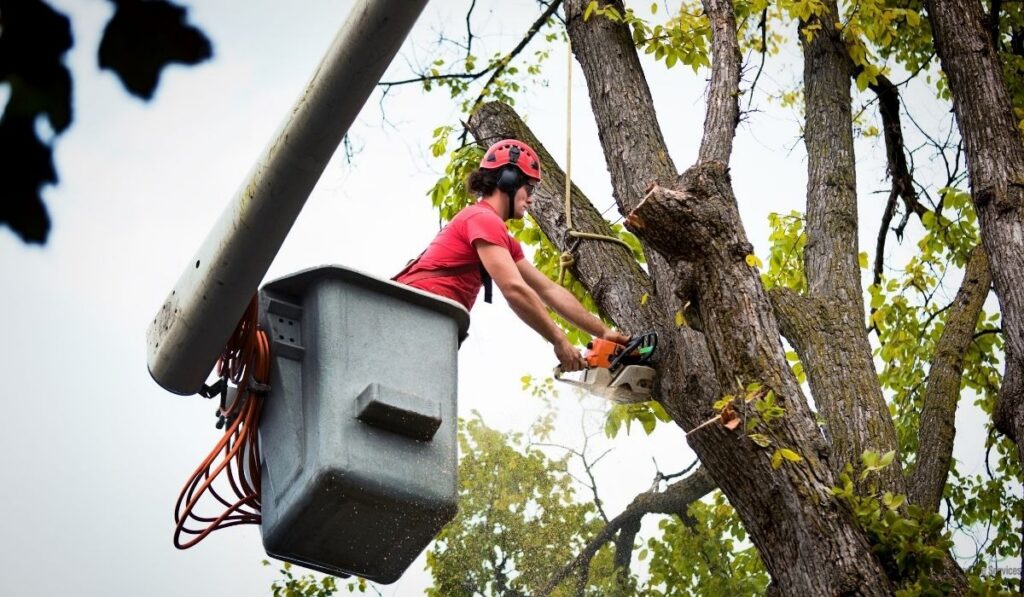
Hire a certified arborist to evaluate weak canopies. Remove dead wood before it becomes a missile. Pay special attention to ash and silver maple. Those species cause most Fort Wayne failures. Good tree care helps protect your home and your deductible.
Schedule a risk assessment with our team. We will give you a free estimate and a full report your insurer will respect. Check out our tree risk assessment services here.
Final Thoughts
Storm damage gets expensive fast, so understanding what your policy will cover before trouble hits can help protect your budget and stress levels. The type of coverage you purchased shapes what your insurance company may pay after a fallen tree claim.
Need fast cleanup or claim documentation? Contact the licensed team at OnSite Tree Services for 24/7 storm response, a free estimate, and safe professional removal. Visit our homepage to learn more about our local tree services.
Frequently Asked Questions
Disclaimer: This article is for general informational purposes only and does not constitute legal, insurance, or professional advice. Policies, laws, and circumstances vary, and readers should consult qualified professionals before making any decisions. OnSite Tree Services is not responsible for any actions taken or not taken based on the information provided and assumes no liability for errors, omissions, or outcomes related to this content.